V&A
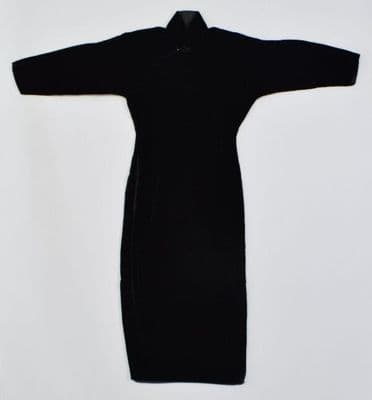
Black Silk Velvet Qipao with Mandarin Collar
1950s · 1950s · Chinese
Production
handmade
Material
silk velvet
Culture
Chinese
Movement
New Look / Post-War
Influences
traditional Chinese qipao · 1950s Western tailoring
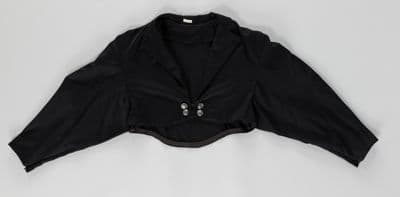
This black silk velvet qipao displays the characteristic fitted silhouette of 1950s Chinese dress design. The garment features a high mandarin collar, long sleeves that taper toward the wrists, and a straight-cut body that follows the natural waistline without excessive shaping. The dress appears to fasten asymmetrically at the collar and possibly down the side seam, typical of qipao construction. The rich black velvet fabric creates a luxurious surface texture while maintaining the clean, unadorned aesthetic. The sleeve construction shows gentle gathering at the shoulder, creating subtle volume that balances the fitted torso. This represents the modernized qipao style popular in 1950s Shanghai, blending traditional Chinese dress elements with contemporary tailoring techniques.
dressstraighthigh neckknee length
Connected To
Influences·traditional Chinese qipaoMovement·New Look / Post-War
SHAREDsame era · cross-culture
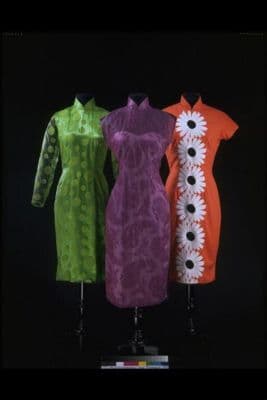
The austere black velvet qipao and its flamboyant Hong Kong cousins in lime and purple capture the qipao's split personality in the 1950s—torn between Shanghai's old-world restraint and Hong Kong's nouveau riche exuberance. Where the black dress whispers with its minimal mandarin collar and body-skimming cut, the embroidered trio shouts with oversized florals and that aggressive orange number's graphic daisy chain marching down the front like pop art.
Echoes Across Time
2000s → 1950s · 50yr56%
SHARED
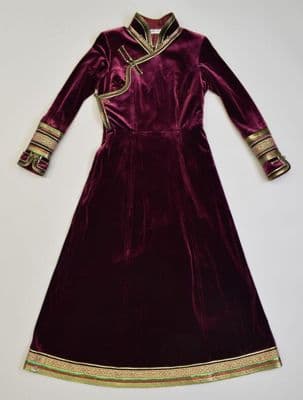
The burgundy robe's theatrical gold braiding and loose, ceremonial cut reveal how the qipao's DNA mutated when it left China—what was once the black dress's sleek, body-conscious silhouette became costume-shop orientalism for Western markets. Both share that distinctive stand-up collar and the sensuous weight of silk velvet, but fifty years transformed the qipao's modernist restraint into something that looks like it belongs in a theme restaurant.
Influences·traditional Chinese qipao
1990s → 1950s
Pull the Thread→
Follow this garment wherever the graph leads