V&A
Lime Green Embroidered Synthetic Qipao Dress
1950s · 1950s · Hong Kong Chinese
Production
ready-to-wear
Material
embroidered synthetic fabric
Culture
Hong Kong Chinese
Movement
Chinese dress modernization · New Look / Post-War
Influences
Western fitted silhouette · traditional Chinese qipao
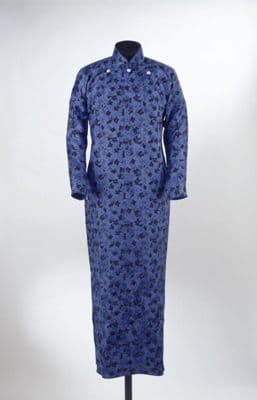
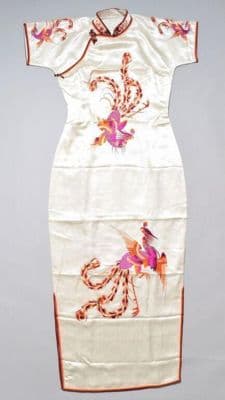
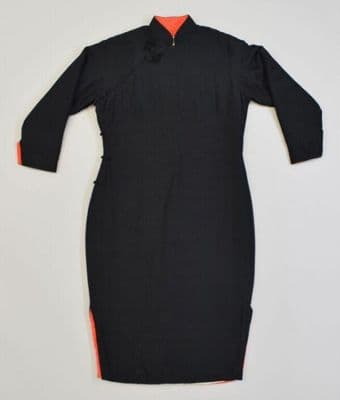
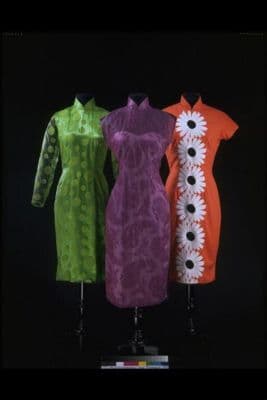
Three qipao dresses displaying the modernized Chinese silhouette popular in post-war Hong Kong. Each features the characteristic high mandarin collar, fitted bodice that follows natural body contours, and knee-length hemline. The green dress shows long fitted sleeves with subtle tonal embroidery, while the purple dress has short sleeves with geometric patterning. The orange dress displays bold black circular motifs arranged vertically down the front. All three demonstrate the qipao's evolution from traditional loose robes to body-conscious Western-influenced silhouettes, with side seam construction replacing traditional front overlap closures. The synthetic fabrics reflect post-war material innovations and accessibility.
dressstraighthigh neckknee length
Connected To
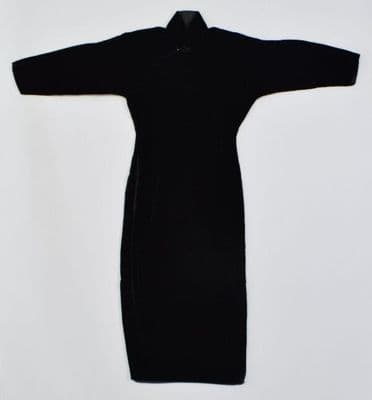
Influences·traditional Chinese qipaoMovement·New Look / Post-War
SHAREDsame era · cross-culture
The austere black velvet qipao and its flamboyant Hong Kong cousins in lime and purple capture the qipao's split personality in the 1950s—torn between Shanghai's old-world restraint and Hong Kong's nouveau riche exuberance. Where the black dress whispers with its minimal mandarin collar and body-skimming cut, the embroidered trio shouts with oversized florals and that aggressive orange number's graphic daisy chain marching down the front like pop art.
Echoes Across Time
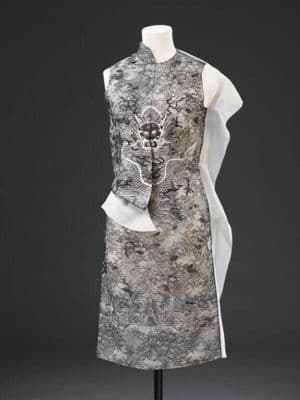
2000s → 1950s · 60yr57%
SHARED
The gray silk organza qipao's delicate dragon embroidery and that lime green dress's bold floral motifs are separated by sixty years, but they're both riffing on the same seductive formula: the qipao's body-conscious silhouette that turns traditional Chinese dress into something unmistakably modern.
Influences·traditional Chinese qipao
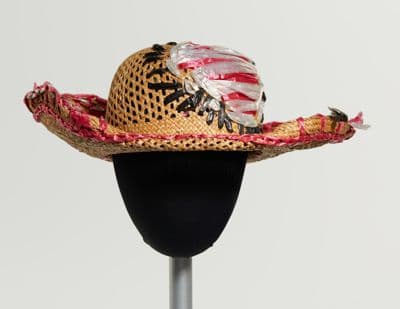
1990s → 1950s · 50yr42%
SHARED
Pull the Thread→
Follow this garment wherever the graph leads