V&A
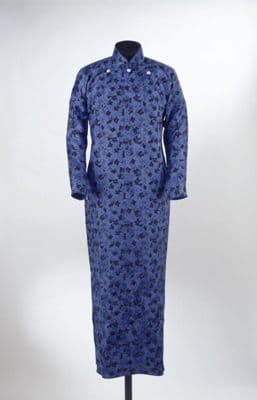
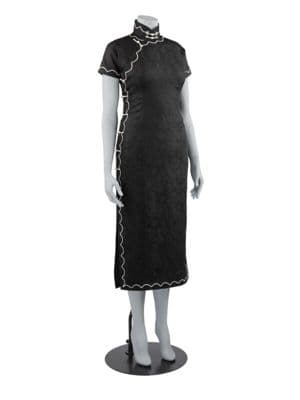
Navy Blue Silk Damask Qipao Dress
1970s · 1970s · Taiwanese
Production
handmade
Material
silk damask
Culture
Taiwanese
Movement
Hippie / Counterculture
Influences
traditional Chinese qipao · 1930s Shanghai cheongsam
A full-length qipao featuring a straight, column-like silhouette that skims the body without excessive tailoring. The garment is constructed from blue silk damask with a subtle tonal floral pattern woven throughout the fabric. It features the characteristic high mandarin collar and appears to have traditional pankou (frog buttons) running asymmetrically along the right side closure. The sleeves are long and fitted, extending to the wrists. The dress reaches floor length with a modest side slit typical of formal qipao construction. The damask weave creates texture and visual interest through the interplay of matte and lustrous silk threads forming the floral motifs against the blue ground.
dressstraighthigh neckmaxi
Connected To
Influences·1930s Shanghai cheongsam
SHARED40 years · cross-culture
These two qipao trace the same bloodline from 1930s Shanghai but speak different dialects of desire. The navy silk damask from the '70s carries the full ceremonial weight of tradition — that high Mandarin collar, the generous length that pools at the ankles, the intricate brocade pattern that whispers rather than shouts.
Pull the Thread→
Follow this garment wherever the graph leads