V&A
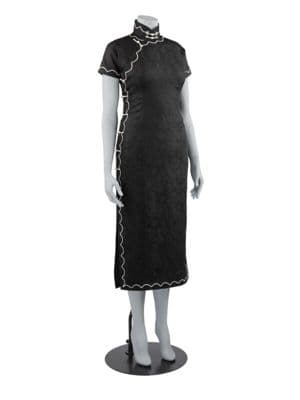
Black Silk Gauze Qipao with White Piping
2010s · 2010s · Chinese
Designer
Guo Yujun and Xu Yulin
Production
artisan-craft
Material
silk gauze
Culture
Chinese
Movement
Contemporary Chinese Fashion Revival · Dark Academia
Influences
traditional qipao silhouette · 1930s Shanghai cheongsam
A contemporary qipao featuring the traditional Chinese dress silhouette with modern construction. The garment is crafted from black silk gauze with a semi-sheer quality, creating subtle texture and depth. White polyester piping defines the asymmetrical front closure, mandarin collar, and armhole edges, providing crisp contrast against the dark fabric. The dress follows the classic qipao form with a high neckline, cap sleeves, and body-conscious fit that skims the torso and hips. The midi-length hemline falls below the knee, maintaining the garment's elegant proportions. The side closure features traditional pankou button loops, while the silk lining ensures opacity and comfort.
dresspencilhigh neckmidi
Connected To
Influences·1930s Shanghai cheongsam
SHARED40 years · cross-culture
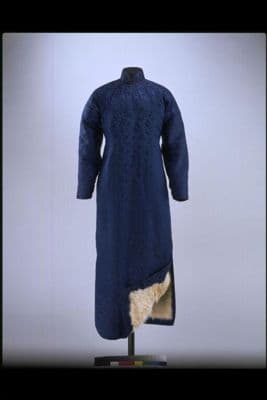
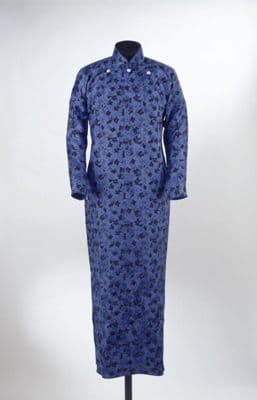
These two qipao trace the same bloodline from 1930s Shanghai but speak different dialects of desire. The navy silk damask from the '70s carries the full ceremonial weight of tradition — that high Mandarin collar, the generous length that pools at the ankles, the intricate brocade pattern that whispers rather than shouts.
Echoes Across Time
1970s → 2010s · 40yr66%
SHARED
These two qipao trace the same bloodline from 1930s Shanghai but speak different dialects of desire. The navy silk damask from the '70s carries the full ceremonial weight of tradition — that high Mandarin collar, the generous length that pools at the ankles, the intricate brocade pattern that whispers rather than shouts.
Influences·1930s Shanghai cheongsam
2010s → 1950s · 60yr65%
SHARED
Pull the Thread→
Follow this garment wherever the graph leads