V&A
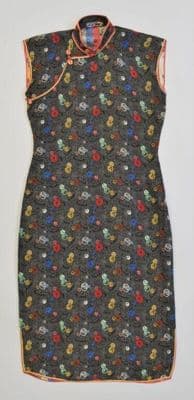
Black Woven Self-Patterned Rayon Qipao
Wartime / Utility Fashion · 1940s · Hong Kong Chinese
Production
handmade
Material
rayon with woven self-pattern
Culture
Hong Kong Chinese
Influences
traditional Chinese qipao · 1940s fitted silhouette
A sleeveless qipao featuring a black rayon base with an all-over woven pattern of small scattered motifs in red, blue, yellow, and other colors. The dress displays the characteristic fitted silhouette of 1940s cheongsam styling with a high mandarin collar, asymmetrical front closure, and straight-cut sleeveless bodice that extends to knee length. The self-patterned rayon fabric shows tiny floral or geometric elements distributed across the surface. Red piping or trim edges the collar and armholes, providing structural definition. The garment represents wartime practicality in Chinese dress, utilizing synthetic rayon fabric while maintaining traditional qipao construction techniques and proportions typical of Hong Kong tailoring during this period.
dressstraighthigh neckknee length
Connected To
Influences·traditional Chinese qipao
SHARED10 years · cross-culture
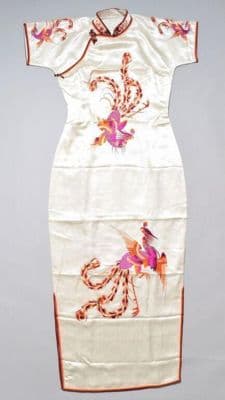
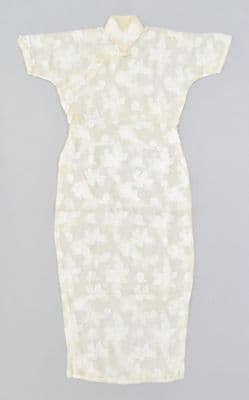
The wartime qipao in black rayon with its tiny scattered florals reads like a whispered echo of the pristine white organza version that followed a decade later. Where the earlier dress speaks in muted utility—its woven self-pattern barely breaking the surface, collar and sleeves pared down to essentials—the 1950s silk version blooms into full ceremonial voice with its crisp mandarin collar and short sleeves that frame the arms like architectural brackets.
Pull the Thread→
Follow this garment wherever the graph leads