V&A
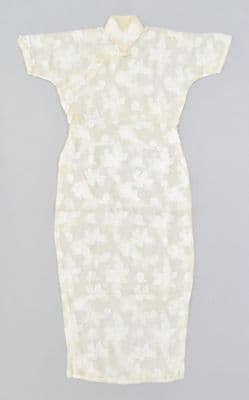
White Silk Organza Qipao with Mandarin Collar
1950s · 1950s · Chinese
Production
ready-to-wear
Material
silk organza
Culture
Chinese
Movement
New Look / Post-War
Influences
traditional Chinese qipao · 1950s Western fitted dress silhouette
This qipao features the characteristic high mandarin collar and fitted silhouette that follows the body's natural curves without excessive ease. The silk organza fabric creates a semi-transparent quality with subtle floral motifs woven or printed throughout. The dress extends to mid-calf length with side seam construction typical of 1950s Shanghai tailoring. Short cap sleeves provide modest arm coverage while the overall cut emphasizes a streamlined feminine form. The lightweight organza gives the garment structure while maintaining fluidity, representing the modernized qipao style that emerged in mid-20th century urban China, blending traditional Chinese dress elements with contemporary Western-influenced proportions.
dresspencilhigh neckknee length
Connected To
Influences·traditional Chinese qipaoMovement·New Look / Post-War
VISUAL ECHOcross-culture
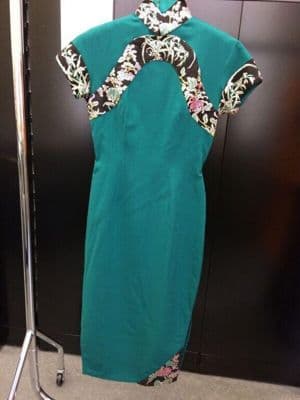
These two qipao reveal how the same silhouette can speak entirely different languages of desire. The teal wool version, with its bold floral trim snaking around the collar and sleeves, announces itself with the confidence of 1950s Hong Kong tailoring—where traditional Chinese dress met Western embellishment techniques. The white silk organza piece whispers where the other shouts, its translucent fabric and minimal construction suggesting the refined restraint of mainland Chinese couture.
Echoes Across Time
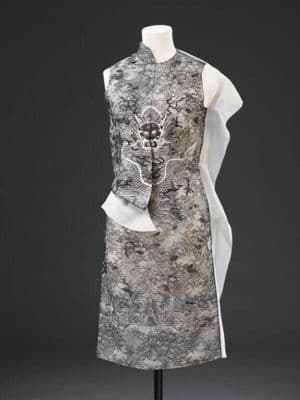
1950s → 2000s · 60yr58%
SHARED
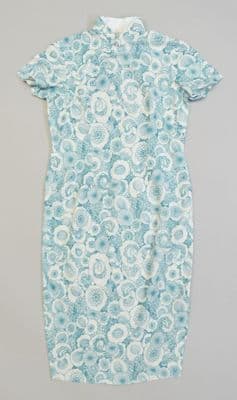
These two qipaos reveal how a silhouette can hold its ground across sixty years while everything else shifts around it. The earlier dress speaks in whispers—its pale floral print so subtle it barely registers against the ivory silk, relying on the architecture of that body-skimming cut and high mandarin collar to do the talking.
Influences·traditional Chinese qipao
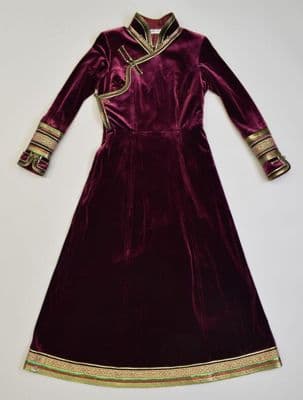
2000s → 1950s · 50yr56%
Pull the Thread→
Follow this garment wherever the graph leads