V&A
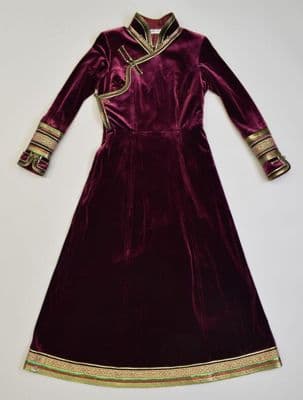
Burgundy Silk Velvet Belted Robe with Braided Decoration
2000s · 2000s · Chinese
Production
ready-to-wear
Material
silk velvet
Culture
Chinese
Movement
Indie Sleaze
Influences
traditional Chinese qipao · Manchu court robes
A full-length robe in rich burgundy silk velvet featuring a traditional Chinese mandarin collar and asymmetrical front closure with decorative braided trim. The garment has fitted long sleeves with elaborate gold braided cuffs and matching trim along the collar, front opening, and hem. The robe is secured with a matching fabric belt at the waist, creating a fitted silhouette through the bodice that flows into a full-length A-line skirt. The gold braided decoration follows traditional Chinese patterns and creates geometric borders throughout the garment. The construction demonstrates contemporary manufacturing techniques applied to traditional Chinese robe styling.
dressstraighthigh neckmaxi
Connected To
59%
Influences·traditional Chinese qipao
SHARED50 years · cross-culture
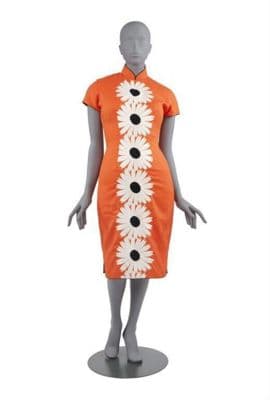
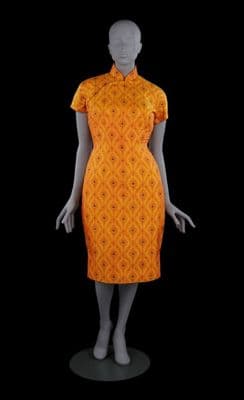
The burgundy velvet robe carries the qipao's DNA in its high mandarin collar and fitted waist, but stretches it into something more ceremonial—almost like a Western dressing gown that learned Mandarin. The orange silk dress, with its proper qipao proportions and traditional geometric print, represents the form's mid-century refinement when it had shed imperial weight for modern femininity.
Echoes Across Time
2000s → 1950s · 50yr59%
SHARED
The burgundy velvet robe carries the qipao's DNA in its high mandarin collar and fitted waist, but stretches it into something more ceremonial—almost like a Western dressing gown that learned Mandarin. The orange silk dress, with its proper qipao proportions and traditional geometric print, represents the form's mid-century refinement when it had shed imperial weight for modern femininity.
Influences·traditional Chinese qipao
2000s → Traditional Chinese
Pull the Thread→
Follow this garment wherever the graph leads