V&A
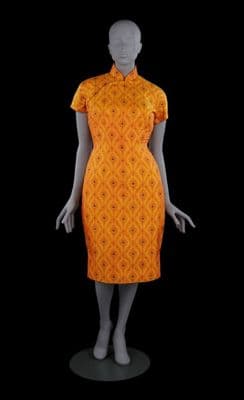
Orange Golden Yellow Printed Silk Qipao Ensemble
1950s · 1950s · Hong Kong
Production
ready-to-wear
Material
printed silk
Culture
Hong Kong
Movement
New Look / Post-War
Influences
traditional Chinese qipao · 1950s Western tailoring
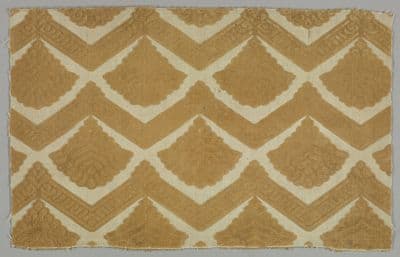
A fitted qipao dress in printed silk featuring an all-over geometric diamond pattern in vibrant orange and golden yellow tones. The garment displays the characteristic high mandarin collar and short sleeves typical of 1950s qipao styling. The dress follows the body's contours closely through the torso and hips, ending at mid-calf length. The geometric motif consists of interlocking diamond shapes creating a continuous lattice pattern across the entire surface. The silk appears to have a smooth, lustrous finish that enhances the pattern's visual impact. This represents the modernized qipao of the 1950s Hong Kong period, when traditional Chinese dress forms were adapted with contemporary Western tailoring techniques and bold printed textiles.
dresspencilhigh neckknee length
Connected To
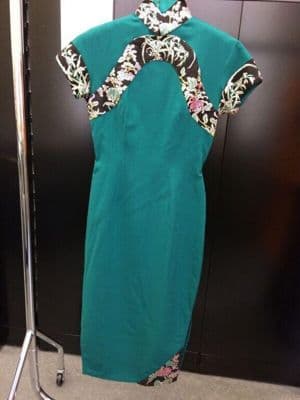
Influences·1950s Western tailoringInfluences·traditional Chinese qipaoMovement·
Echoes Across Time
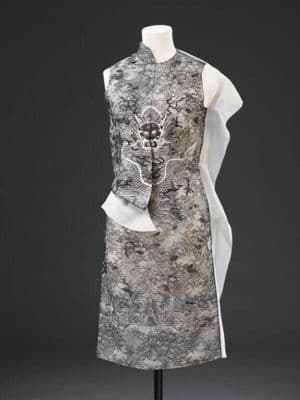
2000s → 1950s · 60yr59%
SHARED
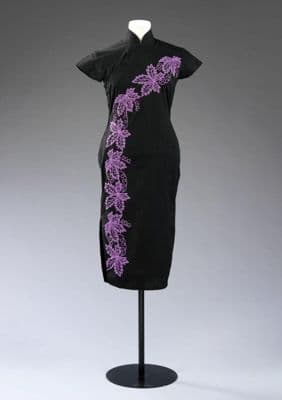
These two qipao reveal how a single silhouette can carry completely different cultural messages across decades. The 1950s Hong Kong version in golden yellow silk speaks the language of prosperity and optimism—its geometric print and body-skimming fit capturing the confident modernity of post-war Hong Kong's emerging identity.
Influences·traditional Chinese qipao
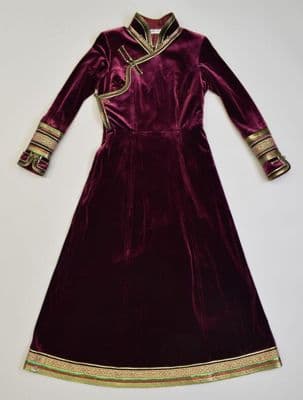
2000s → 1950s · 50yr59%
Pull the Thread→
Follow this garment wherever the graph leads