SMITHSONIAN
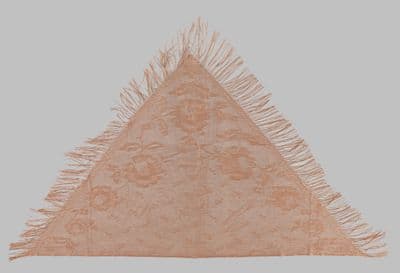
Cream Cotton Bobbin Lace Triangular Shawl
Empire / Regency · 1800s · Russian
Production
handmade
Material
cotton bobbin lace
Culture
Russian
Influences
Empire period draped accessories · Russian bobbin lace tradition
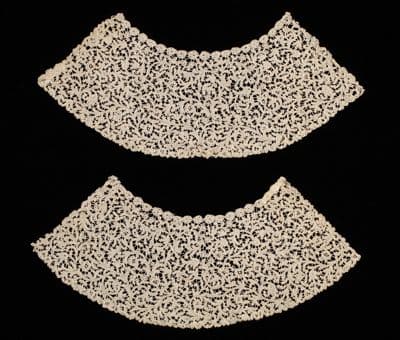
A triangular cotton bobbin lace shawl displaying the characteristic fine mesh ground typical of early 19th-century Russian lacemaking. The piece features an intricate geometric pattern worked in bobbin lace technique, with delicate threadwork creating a semi-transparent fabric. The triangular silhouette follows Empire period fashion for draped accessories that complemented the high-waisted, columnar dress silhouettes of the era. The cream-colored cotton thread shows the refined craftsmanship of Russian lace artisans, with consistent tension and precise geometric motifs throughout the ground. The scalloped or finished edge treatment demonstrates the technical skill required for bobbin lace construction, where multiple threads are manipulated simultaneously on a pillow to create the interconnected mesh structure.
scarf
Connected To
Worn with·spencer jacketTechnique·lacework
SHAREDsame era · cross-culture
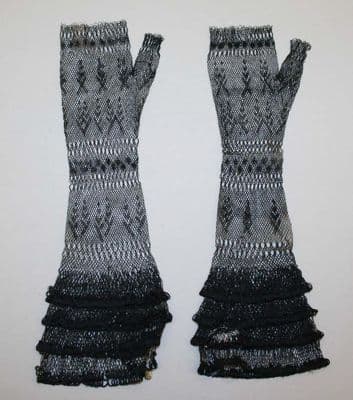
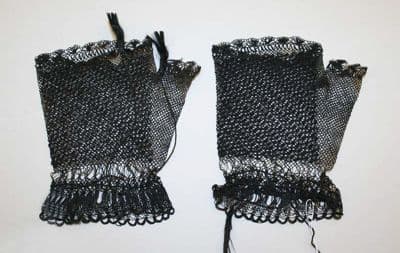
These delicate black silk mitts and cream cotton shawl reveal how Empire-era women across continents spoke the same language of refined lacework, whether navigating Boston drawing rooms or St. Petersburg salons. Both pieces deploy the period's obsession with transparent textures—the mitts' gossamer net punctuated by picot edging, the shawl's intricate bobbin work creating negative space as deliberately as solid thread.
Text62%
Image74%
Entity30%
Worn with·spencer jacket
SHAREDsame era · cross-culture
Text64%
Image72%
Technique·laceworkMotif·lattice-trellis
SHARED90 years · cross-culture
Text75%
Technique·laceworkFunction·formal-evening
SHARED210 years · cross-culture · cross-category
Text49%
Pull the Thread→
Follow this garment wherever the graph leads