THE MET
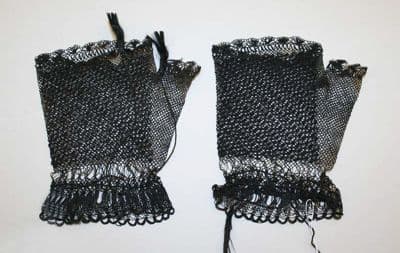
Black Silk Net Fingerless Mitts White Trim
Empire / Regency · 1800s · American
Production
handmade
Material
silk net
Culture
American
A pair of black silk net fingerless mitts with white trim and decorative edging. The mitts feature an open mesh construction that would allow the skin to show through while providing modest hand coverage. White contrasting trim appears at the wrist opening and along the edges. The construction shows fine netted silk work typical of early 19th century accessories. Frayed edges and loose threads are visible, indicating age and delicate construction. The mitts would have extended from the wrist to cover the back of the hand while leaving fingers exposed, allowing for dexterity while maintaining the fashionable covered appearance required for ladies of the period.
glove
Connected To
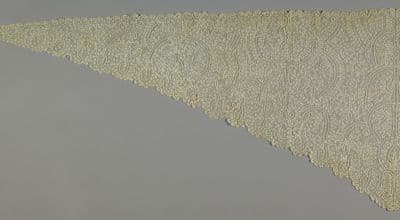
Worn with·spencer jacketTechnique·lacework
SHAREDsame era · cross-culture
These delicate black silk mitts and cream cotton shawl reveal how Empire-era women across continents spoke the same language of refined lacework, whether navigating Boston drawing rooms or St. Petersburg salons. Both pieces deploy the period's obsession with transparent textures—the mitts' gossamer net punctuated by picot edging, the shawl's intricate bobbin work creating negative space as deliberately as solid thread.
Text62%
Image74%
Entity30%
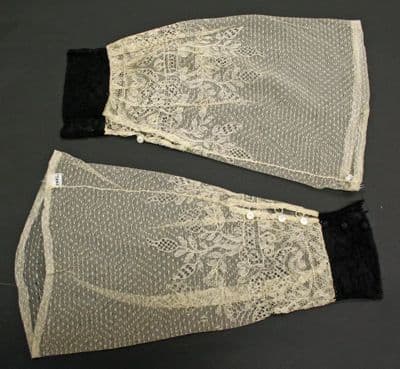
Worn with·day dressTechnique·lacework
SHARED40 years · cross-culture
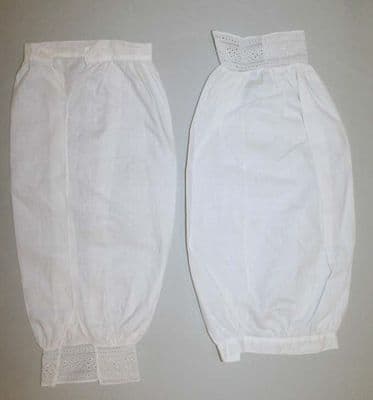
These two pairs of gloves reveal how the Victorians inherited the Regency obsession with silk net but cranked up the drama. The earlier black mitts, with their delicate white trim and modest fingerless design, speak to Empire restraint—functional elegance for a woman who might actually use her hands. By the 1850s, those cream undersleeves have become theatrical armor: longer, more elaborate, with that assertive black velvet cuff that announces itself across a room.

Worn with·day dressTechnique·lacework
SHARED60 years · cross-culture
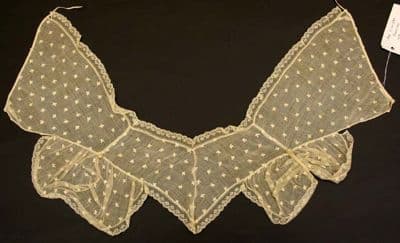
These two pieces of Victorian-era lacework reveal how the same obsession with delicate handcraft could serve completely opposite social functions. The Belgian bobbin lace collar, with its dense floral motifs and pristine cream color, was pure respectability theater—the kind of detachable finery that let middle-class women signal virtue through visible labor (someone's painstaking hours made this).
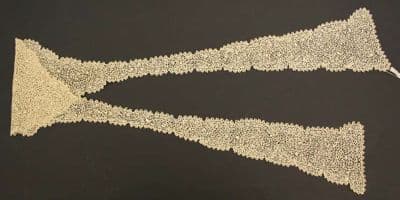
Worn with·day dressTechnique·lacework
SHARED55 years · cross-culture · cross-category
These delicate accessories reveal how lace-making techniques migrated from necessity to ornament across the Atlantic. The Irish cotton cap ties, with their densely worked bobbin lace creating geometric patterns, represent the height of Celtic lace craft during the famine era when such work literally fed families.
Pull the Thread→
Follow this garment wherever the graph leads