THE MET
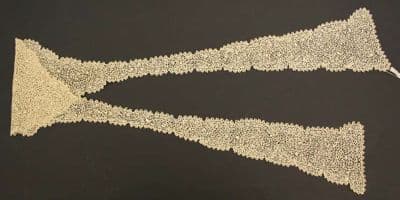
Cotton Lace Cap Ties with Irish Construction
Victorian Early / Crinoline · 1840s-1860s · Irish
Production
handmade
Material
cotton lace
Culture
Irish
Influences
Irish crochet lace tradition
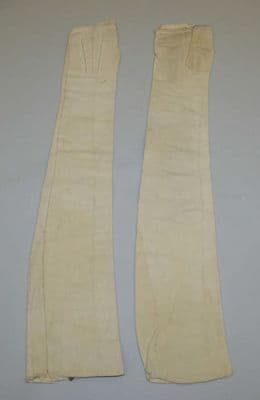
Two elongated lace streamers or cap ties crafted from fine cotton bobbin lace, displaying characteristic Irish lace construction. Each piece tapers from a wider end to a narrower point, featuring intricate openwork patterns with delicate mesh grounds and raised motifs. The lace exhibits the dense, three-dimensional quality typical of Irish crochet or needle lace techniques, with small floral or geometric elements creating textural variation across the surface. These streamers would have secured a woman's indoor cap beneath the chin or at the nape of the neck, representing the elaborate headwear customs of mid-Victorian domestic dress.
headband/head covering/hair accessory
Connected To
Worn with·day dressTechnique·lacework
SHARED5 years · cross-culture
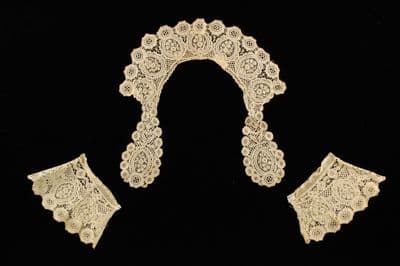
These two pieces reveal how Victorian lace-making split along class and geographic lines, even as both served the same purpose of elevating everyday dress. The Irish cotton cap ties show the democratizing force of machine-made net combined with hand-worked motifs—notice how the floral patterns repeat with mechanical precision yet retain organic irregularity in their execution.
Text75%
Image66%
Entity27%
Worn with·day dressTechnique·lacework
SHARED5 years · cross-culture · cross-category
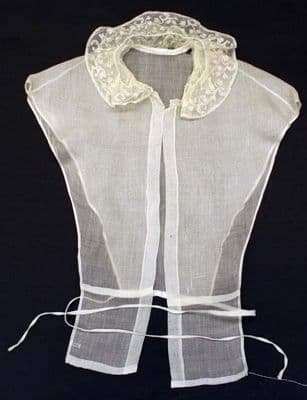
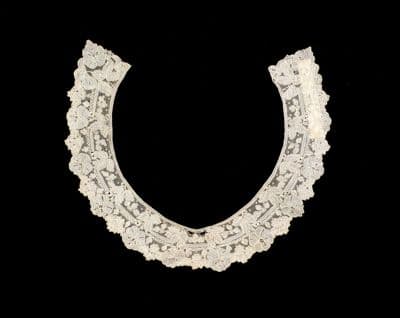
These two pieces reveal how Victorian lace-making became a cottage industry arms race across Europe, with Belgian bobbin lace collars like this one—dense with its geometric mesh and scalloped edges—competing against Irish crochet cap ties that achieved similar decorative density through entirely different means.
Worn with·day dressTechnique·lacework
SHARED55 years · cross-culture · cross-category
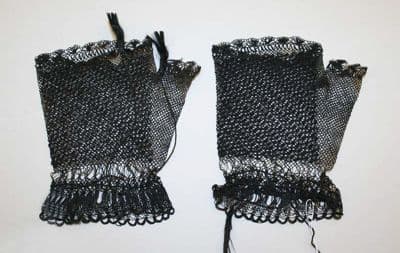
These delicate accessories reveal how lace-making techniques migrated from necessity to ornament across the Atlantic. The Irish cotton cap ties, with their densely worked bobbin lace creating geometric patterns, represent the height of Celtic lace craft during the famine era when such work literally fed families.
Worn with·day dressTechnique·lacework
SHARED25 years · cross-culture · cross-category
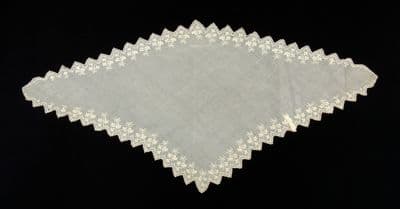
These two pieces reveal how Irish needlework conquered American necklines through sheer technical virtuosity. The cap ties' dense, almost granular lacework—built up through the painstaking Irish technique of creating dimensional texture with cotton thread—finds its genteel descendant in the fichu's precise scalloped border, where that same obsessive attention to edge treatment has been domesticated into something a respectable American woman could wear to afternoon tea.
Pull the Thread→
Follow this garment wherever the graph leads