THE MET
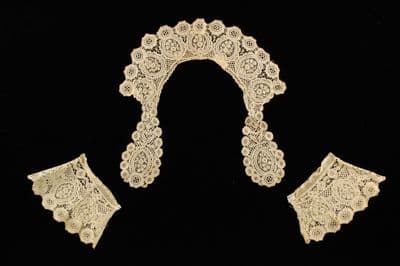
Cream Bobbin Lace Collar and Cuff Set
Victorian Early / Crinoline · 1850s · British
Production
handmade
Material
bobbin lace
Culture
British
Influences
Renaissance punto in aria lace · Flemish bobbin lace tradition
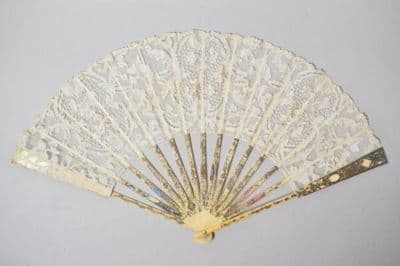
A three-piece bobbin lace set consisting of a large horseshoe-shaped collar and matching pair of cuffs. The collar features an elaborate design of interconnected circular medallions with floral motifs, creating a deep scalloped edge that would frame the neckline. The cuffs mirror the collar's intricate lacework with similar circular patterns and scalloped borders. The lace demonstrates fine craftsmanship typical of mid-19th century European production, with delicate threadwork forming geometric and botanical patterns. These detachable accessories would have been worn over a plain dress to add formality and decoration, reflecting the Victorian preference for modular fashion elements that could transform simple garments.
headband/head covering/hair accessory
Connected To
Worn with·day dressTechnique·lacework
SHARED10 years · cross-culture · cross-category
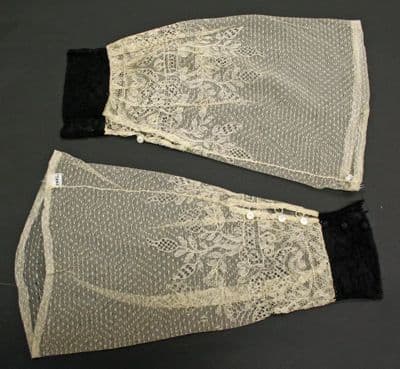
These delicate cream confections reveal the Victorian obsession with transforming the mundane act of getting dressed into an elaborate performance of femininity. The silk net undersleeves with their jaunty black velvet cuffs and the bobbin lace collar set both served the same purpose — to refresh a dress's appearance without the expense of a new garment, layering intricate handwork over simpler foundations.
Text77%
Image78%
Entity29%
Worn with·day dressTechnique·lacework
SHARED5 years · cross-culture
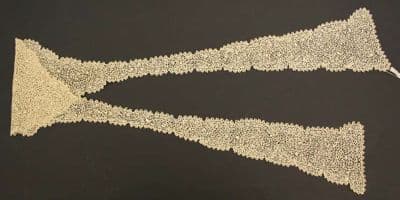
These two pieces reveal how Victorian lace-making split along class and geographic lines, even as both served the same purpose of elevating everyday dress. The Irish cotton cap ties show the democratizing force of machine-made net combined with hand-worked motifs—notice how the floral patterns repeat with mechanical precision yet retain organic irregularity in their execution.
Worn with·day dressTechnique·lacework
SHAREDsame era · cross-culture
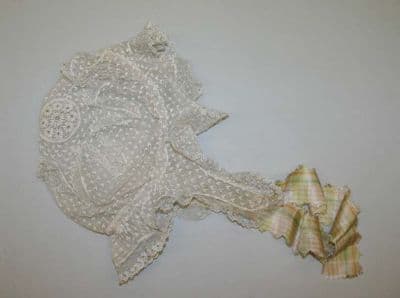
These two pieces reveal how bobbin lace became the democratic luxury of Victorian domesticity, requiring the same painstaking technique whether destined for an American woman's private morning cap or a British lady's public collar and cuffs. The cap's gossamer mesh dissolves into pure transparency, while the collar asserts itself with bold scalloped edges and dense floral motifs—yet both demand the same finger-numbing hours of thread manipulation around hundreds of tiny bobbins.
Worn with·day dress
SHARED40 years · cross-culture · cross-category
Text48%
Image68%
Pull the Thread→
Follow this garment wherever the graph leads