THE MET
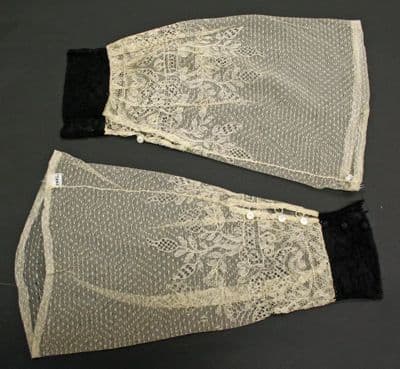
Cream Silk Net Undersleeves with Black Velvet Cuffs
Victorian Early / Crinoline · 1840s · American or European
Production
handmade
Material
silk net
Culture
American or European
Influences
Victorian modesty requirements · detachable dress accessories
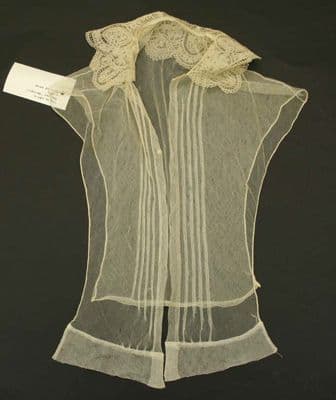
A pair of detachable undersleeves constructed from fine silk net with intricate floral lace panels. The sleeves feature black velvet cuffs and are designed to be worn beneath dress sleeves to provide modesty and decorative detail at the wrist and forearm. The net fabric creates a delicate honeycomb pattern, while the lace sections display elaborate floral motifs typical of mid-19th century needlework. These accessories allowed Victorian women to vary their dress appearance and maintain propriety by covering bare arms, particularly important during the crinoline period when dress sleeves were often short or three-quarter length.
glovewrist-length
Connected To
Worn with·day dressTechnique·lacework
SHARED15 years · cross-culture
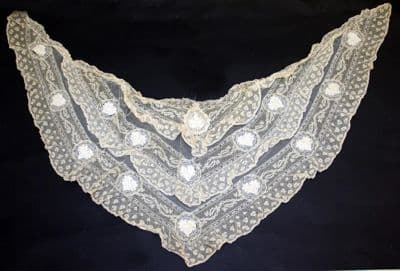
These delicate cream lace accessories reveal the Victorian obsession with modular modesty—both the undersleeves and triangular fichu served as strategic coverage for day dress décolletage, transforming a single gown into multiple looks of varying propriety.
Text67%
Image79%
Entity29%
Worn with·day dressTechnique·lacework
SHARED10 years · cross-culture · cross-category
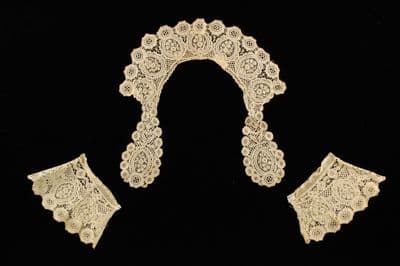
These delicate cream confections reveal the Victorian obsession with transforming the mundane act of getting dressed into an elaborate performance of femininity. The silk net undersleeves with their jaunty black velvet cuffs and the bobbin lace collar set both served the same purpose — to refresh a dress's appearance without the expense of a new garment, layering intricate handwork over simpler foundations.
Worn with·bodiceTechnique·lacework
SHARED260 years · cross-culture
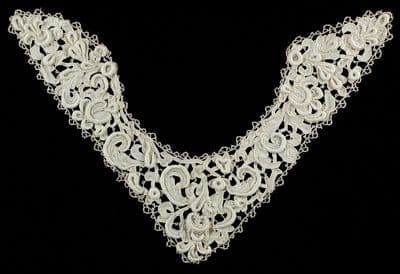
These two pieces reveal how lace evolved from architectural statement to intimate accessory across three centuries. The Elizabethan collar's bold cutwork creates dramatic negative space—those swooping voids between the dense floral motifs were designed to frame the face like a starched halo. The Victorian undersleeves whisper where the collar shouted: their delicate net catches light subtly, while black velvet cuffs anchor what might otherwise float away.
Worn with·day dressTechnique·lacework
SHARED40 years · cross-culture
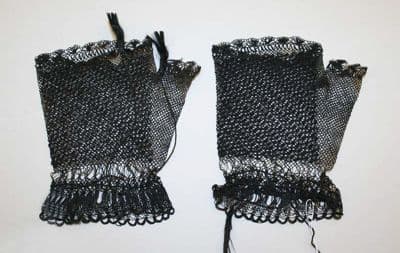
These two pairs of gloves reveal how the Victorians inherited the Regency obsession with silk net but cranked up the drama. The earlier black mitts, with their delicate white trim and modest fingerless design, speak to Empire restraint—functional elegance for a woman who might actually use her hands. By the 1850s, those cream undersleeves have become theatrical armor: longer, more elaborate, with that assertive black velvet cuff that announces itself across a room.
Pull the Thread→
Follow this garment wherever the graph leads