THE MET
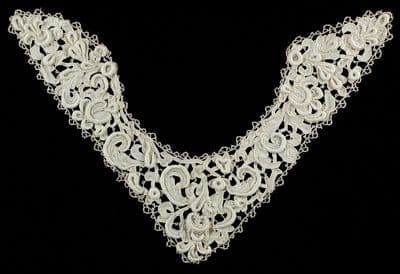
Cream Cutwork Linen Lace V-Shaped Collar
Elizabethan · 1600s-1700s · Italian
Production
handmade
Material
cutwork linen lace
Culture
Italian
Influences
Venetian needlelace tradition · Renaissance cutwork evolution
This Italian Baroque collar features intricate cutwork linen lace arranged in a deep V-shaped configuration. The lace displays elaborate scrolling foliate patterns with openwork areas created by cutting away fabric and securing edges with buttonhole stitching. The design shows characteristic Baroque complexity with densely packed curvilinear motifs that create dramatic light-and-shadow effects against the black background. The collar's substantial width and pointed V-shape would have framed the neckline of a bodice or doublet, creating a formal decorative element typical of 17th-century aristocratic dress. The precision of the cutwork technique and quality of the linen indicate high-status craftsmanship.
scarf
Connected To
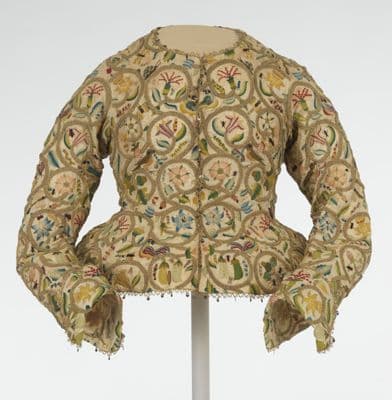
Worn with·doubletTechnique·hand-embroideryFunction·court-formal
SHARED30 years · cross-culture · cross-category
These pieces reveal how the same aristocratic impulse for botanical ornament traveled from Italian collar to English waistcoat across three decades of shifting court fashion.
Text63%
Image66%
Entity34%
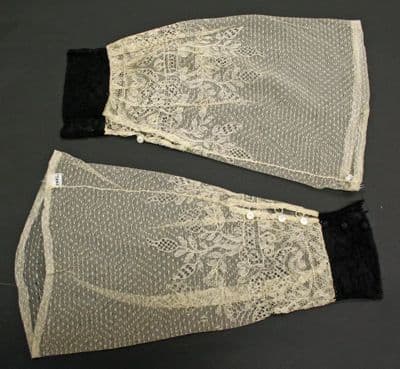
Worn with·bodiceTechnique·lacework
SHARED260 years · cross-culture
These two pieces reveal how lace evolved from architectural statement to intimate accessory across three centuries. The Elizabethan collar's bold cutwork creates dramatic negative space—those swooping voids between the dense floral motifs were designed to frame the face like a starched halo. The Victorian undersleeves whisper where the collar shouted: their delicate net catches light subtly, while black velvet cuffs anchor what might otherwise float away.
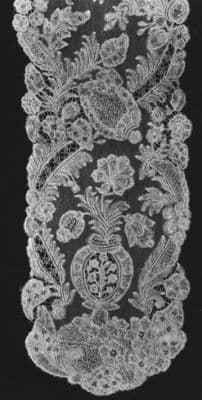
Technique·laceworkFunction·court-formalMotif·scroll-spiral
SHARED150 years · cross-culture · cross-category
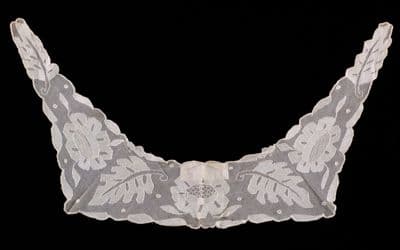
Technique·hand-embroideryTechnique·laceworkMotif·scroll-spiral
SHARED260 years · cross-culture
Pull the Thread→
Follow this garment wherever the graph leads