THE MET
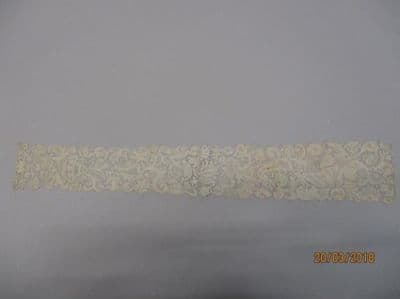
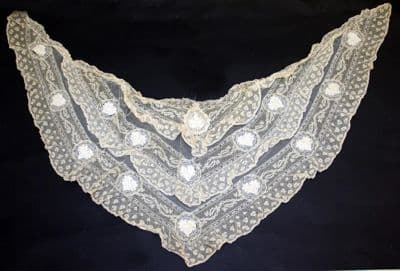
Cream Cotton Lace Triangular Fichu
Victorian Early / Crinoline · 1840s-1860s · European
Production
handmade
Material
cotton lace
Culture
European
Influences
French Valenciennes lace tradition
A triangular cotton lace fichu displaying intricate bobbin lace construction with multiple geometric patterns. The piece features graduated bands of different lace motifs, including floral medallions, geometric mesh, and scalloped borders. The triangular shape measures approximately 24 inches along each side, designed to drape gracefully over the shoulders and décolletage. The lace exhibits fine workmanship with varying densities of thread creating textural contrast between solid motifs and open mesh grounds. The scalloped edges are finished with delicate picot details. This type of modesty covering was essential for Victorian women's daywear, transforming low necklines into appropriate public attire.
scarf
Connected To
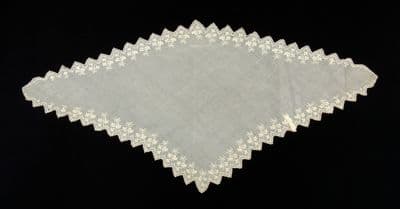
Worn with·chemisetteWorn with·day dressTechnique·lacework
SHARED25 years · cross-culture
These two fichus trace the evolution of modesty from practical necessity to performative virtue. The earlier American piece relies on crisp geometric scalloping—machine-precise edges that speak to New World efficiency—while the later European example drowns itself in cascading layers of handmade lace, each tier more elaborate than the last.
Text85%
Image84%
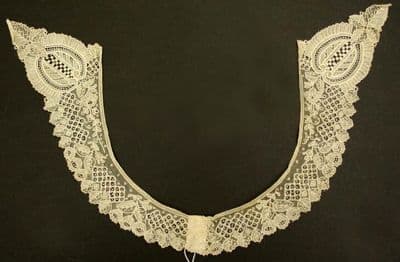
Worn with·chemisetteTechnique·lacework
SHARED5 years · cross-culture
Both pieces speak the same Victorian language of respectability through intricate handwork, but they solve different problems of propriety. The Belgian collar's geometric bobbin lace creates a crisp frame for the face, while the triangular fichu's softer needle lace cascades in romantic scallops designed to fill a low neckline.
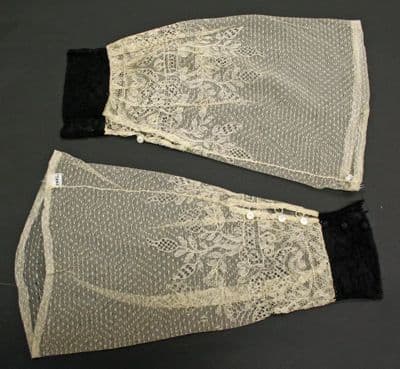
Worn with·day dressTechnique·lacework
SHARED15 years · cross-culture
These delicate cream lace accessories reveal the Victorian obsession with modular modesty—both the undersleeves and triangular fichu served as strategic coverage for day dress décolletage, transforming a single gown into multiple looks of varying propriety.
Worn with·day dressTechnique·lacework
SHARED5 years · cross-culture · cross-category
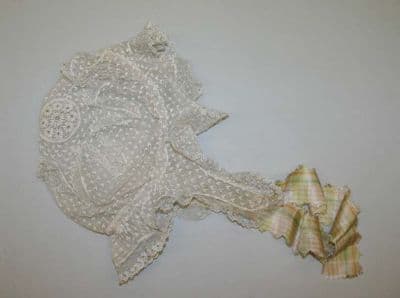
Both pieces speak the same Victorian language of domestic virtuosity, where intricate bobbin lace declared a woman's refinement whether framing her face or her décolletage. The cap's delicate mesh and the fichu's geometric chevron borders represent two sides of mid-19th century propriety—one covering the hair in private moments, the other modestly veiling the neckline in public—but both requiring the same painstaking hours of handwork that only leisure could afford.
Pull the Thread→
Follow this garment wherever the graph leads