THE MET
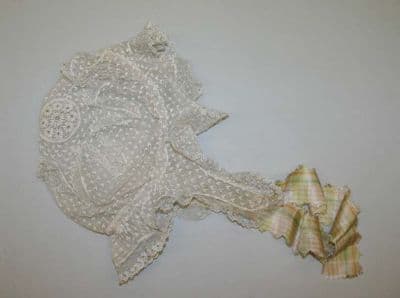
Ivory Cotton Bobbin Lace Indoor Cap
Victorian Early / Crinoline · 1850s · American
Production
mass-produced
Material
cotton bobbin lace
Culture
American
Influences
European bobbin lace traditions
This mid-19th century indoor cap features an intricate cotton bobbin lace construction with a geometric mesh pattern throughout. The cap has a close-fitting crown that gathers at the top, creating soft volume, and extends into wide lappets or streamers that would tie under the chin or at the nape. The lace shows a consistent openwork structure with small hexagonal or diamond-shaped cells, typical of machine-made bobbin lace of the period. The streamers are finished with cream silk ribbon trim in a striped pattern. This type of cap was worn by married women indoors as part of proper Victorian domestic dress, serving both modesty and fashion functions while protecting elaborate hairstyles.
headband/head covering/hair accessory
Connected To
Worn with·day dressTechnique·lacework
SHAREDsame era · cross-culture
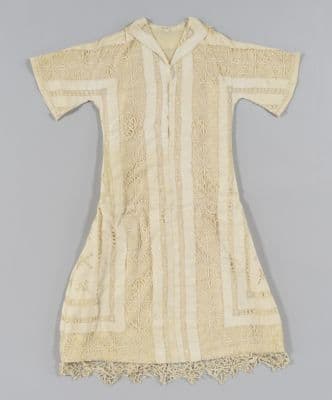
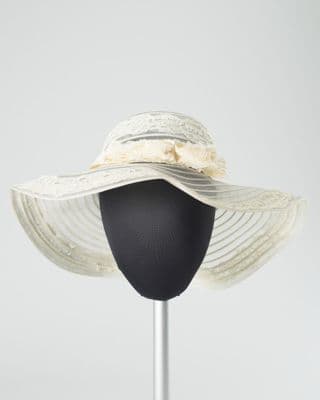
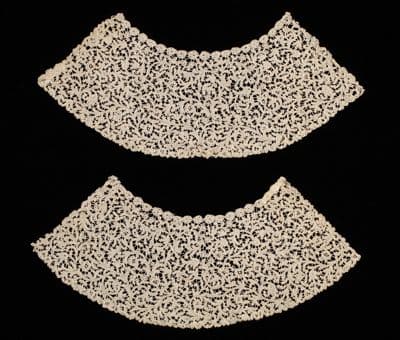
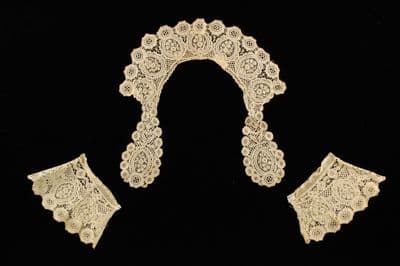
These two pieces reveal how bobbin lace became the democratic luxury of Victorian domesticity, requiring the same painstaking technique whether destined for an American woman's private morning cap or a British lady's public collar and cuffs. The cap's gossamer mesh dissolves into pure transparency, while the collar asserts itself with bold scalloped edges and dense floral motifs—yet both demand the same finger-numbing hours of thread manipulation around hundreds of tiny bobbins.
Text79%
Image73%
Entity26%
Worn with·day dressTechnique·lacework
SHARED5 years · cross-culture · cross-category
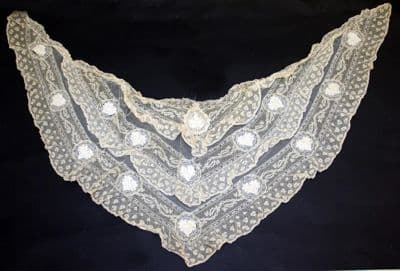
Both pieces speak the same Victorian language of domestic virtuosity, where intricate bobbin lace declared a woman's refinement whether framing her face or her décolletage. The cap's delicate mesh and the fichu's geometric chevron borders represent two sides of mid-19th century propriety—one covering the hair in private moments, the other modestly veiling the neckline in public—but both requiring the same painstaking hours of handwork that only leisure could afford.
Worn with·day dress
SHARED40 years · cross-category
Text49%
Image65%
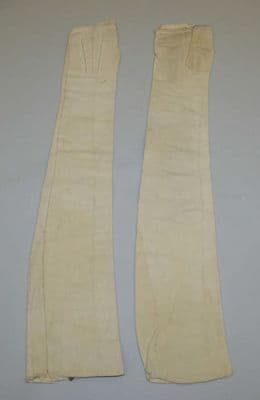
Worn with·day dress
SHARED30 years · cross-category
Text58%
Image73%
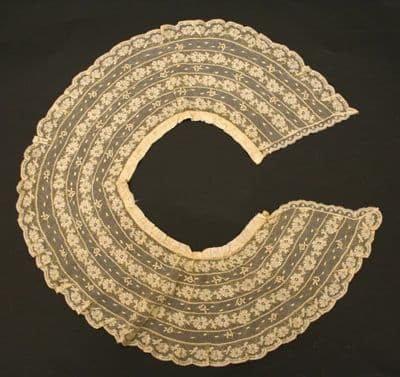
Pull the Thread→
Follow this garment wherever the graph leads