THE MET
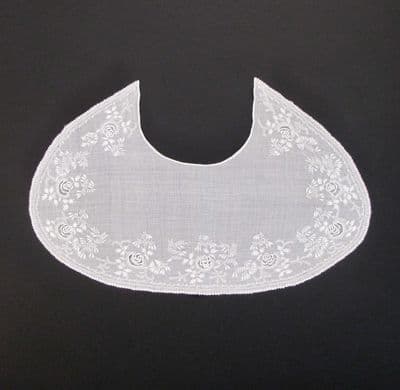
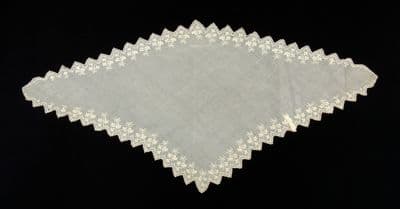
White Cotton Fichu with Scalloped Edging
Romantic · 1830s · American
Production
handmade
Material
cotton
Culture
American
A triangular cotton fichu with elaborate scalloped edging featuring multiple tiers of decorative trim. The white cotton fabric appears lightweight and semi-sheer, typical of muslin or fine cotton lawn used for women's accessories in the 1830s. The most striking feature is the complex border treatment with graduated scalloped edges that create a rich textural frame around the entire perimeter. The fichu would have been worn draped over the shoulders and crossed at the chest, providing modest coverage over low necklines typical of Romantic period dress. The intricate handwork demonstrates the period's emphasis on decorative needlework and feminine accomplishment.
scarf
Connected To
Worn with·chemisetteWorn with·day dressTechnique·hand-embroideryTechnique·lacework
SHAREDsame era · cross-culture
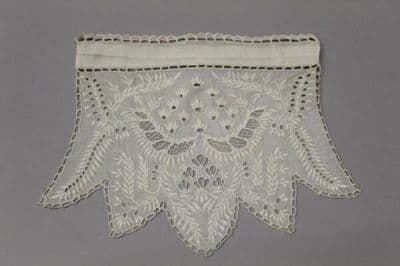
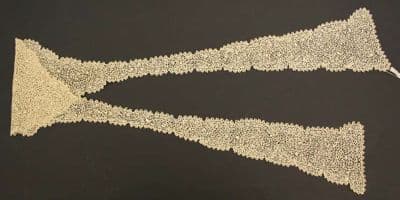
These two pieces reveal how the Romantic era's obsession with delicate handwork created a universal language of femininity that crossed the Atlantic. The American fichu's precise geometric cutwork and that sawtooth scalloped edge speak the same dialect as the British cuffs' flowing floral embroidery and needle lace points—both demanding hours of invisible labor to achieve an effect of effortless refinement.
Text65%
Worn with·chemisetteWorn with·day dressTechnique·lacework
SHARED25 years · cross-culture
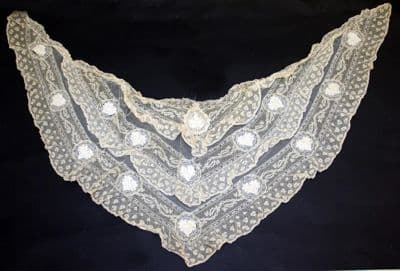
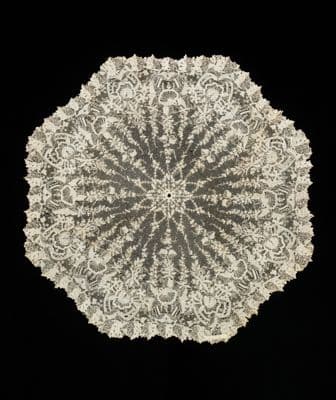
These two fichus trace the evolution of modesty from practical necessity to performative virtue. The earlier American piece relies on crisp geometric scalloping—machine-precise edges that speak to New World efficiency—while the later European example drowns itself in cascading layers of handmade lace, each tier more elaborate than the last.
Worn with·chemisetteTechnique·lacework
SHARED20 years · cross-culture
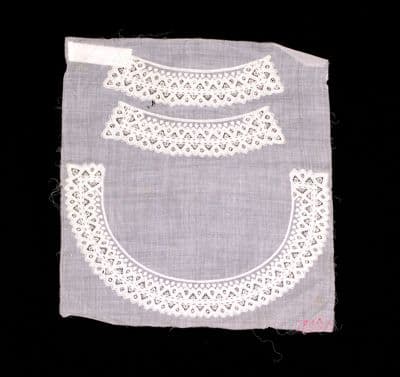
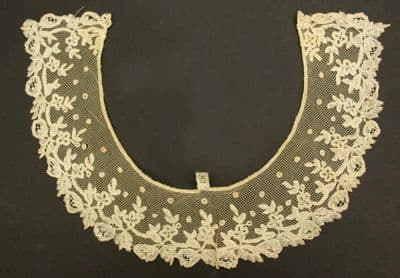
These two pieces trace the evolution of white work from necessity to ornament across the Atlantic. The Victorian collar set, with its precise bobbin lace laid like architectural molding against sheer linen, represents the height of European technical virtuosity—each geometric repeat a small miracle of thread manipulation.
Worn with·day dressTechnique·lacework
SHARED25 years · cross-culture · cross-category
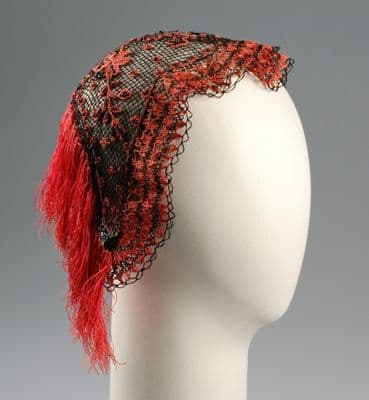
These two pieces reveal how Irish needlework conquered American necklines through sheer technical virtuosity. The cap ties' dense, almost granular lacework—built up through the painstaking Irish technique of creating dimensional texture with cotton thread—finds its genteel descendant in the fichu's precise scalloped border, where that same obsessive attention to edge treatment has been domesticated into something a respectable American woman could wear to afternoon tea.
Pull the Thread→
Follow this garment wherever the graph leads