THE MET
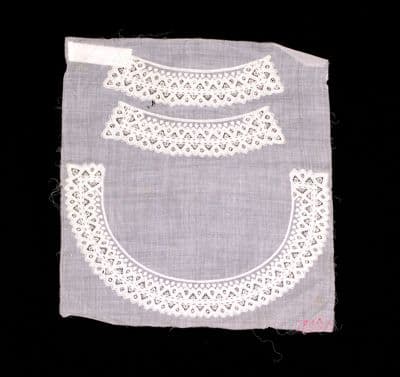
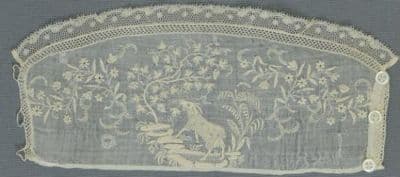
White Linen Collar and Cuff Set with Bobbin Lace
Victorian Early / Crinoline · 1850s · French
Production
handmade
Material
linen with bobbin lace
Culture
French
A matching set of detachable white linen collar and cuffs featuring intricate bobbin lace trim in geometric patterns. The collar displays a wide, rounded shape typical of 1850s fashion, with delicate openwork lace creating repeating diamond and chevron motifs along the edges. Two matching cuffs show similar lace construction with scalloped borders. The base linen fabric appears fine and semi-sheer, providing a crisp foundation for the handmade lace applications. These separate accessories would have been worn over a plain dress bodice to add decorative refinement, representing the Victorian preference for modular dressing and the display of fine needlework skills.
scarf
Connected To
Worn with·chemisetteTechnique·lacework
SHARED20 years · cross-culture
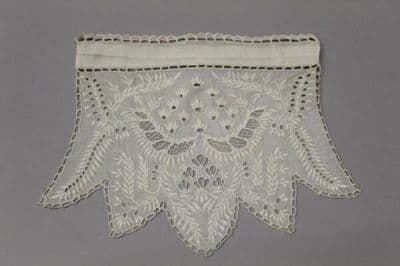
These two pieces of neckwear reveal how Victorian propriety demanded the same solution on both sides of the Channel: transforming a plain dress into something respectable with detachable white lacework. The French bobbin lace collar floats its geometric chevrons like architectural trim, while the British needle lace cuffs bloom with botanical motifs that seem to grow from the muslin ground.
Text77%
Image85%
Entity28%
Worn with·chemisetteTechnique·lacework
SHARED20 years · cross-culture
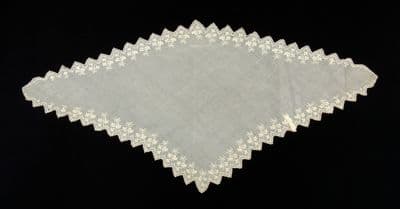
These two pieces trace the evolution of white work from necessity to ornament across the Atlantic. The Victorian collar set, with its precise bobbin lace laid like architectural molding against sheer linen, represents the height of European technical virtuosity—each geometric repeat a small miracle of thread manipulation.
Worn with·chemisetteTechnique·lacework
SHARED10 years · cross-culture
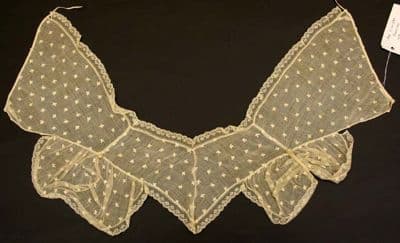
These Victorian collars reveal how the same impulse toward feminine propriety could take wildly different forms within a decade. The American cotton net piece, with its playful polka dots and soft scalloped edges, speaks to a more democratic elegance—machine-made lace that could dress up a working woman's chemisette without breaking the bank.
Worn with·chemisette
SHAREDsame era · cross-culture
Text83%
Image
Pull the Thread→
Follow this garment wherever the graph leads