THE MET
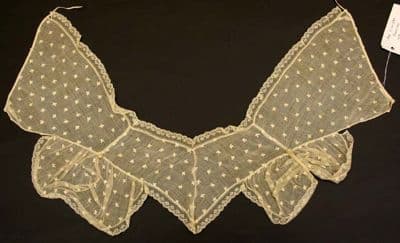
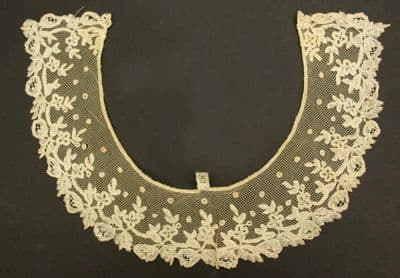
Cream Cotton Net Lace Collar with Polka Dots
Victorian Early / Crinoline · 1840s · American
Production
ready-to-wear
Material
cotton net
Culture
American
A delicate detachable collar made from fine cotton net with an all-over polka dot pattern. The collar features a distinctive scalloped edge with multiple pointed sections that would drape around the neckline. The net fabric appears to be machine-made with regularly spaced small dots throughout the weave. The collar's construction shows careful finishing along all edges with what appears to be a narrow binding or rolled hem. This type of removable collar was typical of mid-19th century women's fashion, allowing for easy laundering and the ability to refresh a dress's appearance. The lightweight cotton net construction and modest dotted pattern suggest this was intended for daywear rather than formal occasions.
scarf
Connected To
Worn with·chemisetteTechnique·lacework
SHARED10 years · cross-culture
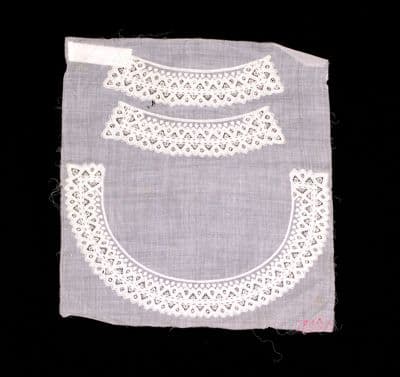
These Victorian collars reveal how the same impulse toward feminine propriety could take wildly different forms within a decade. The American cotton net piece, with its playful polka dots and soft scalloped edges, speaks to a more democratic elegance—machine-made lace that could dress up a working woman's chemisette without breaking the bank.
Text83%
Image77%
Entity24%
55%
Worn with·chemisetteTechnique·lacework
SHARED180 years
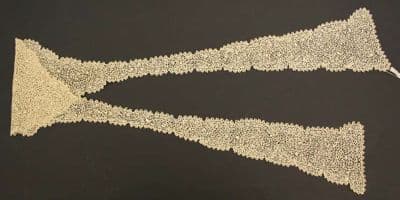
These two collars reveal how the Victorian obsession with respectability transformed lace from baroque extravagance into middle-class propriety. The earlier bobbin lace collar sprawls with dense floral motifs that seem to grow organically from the mesh ground, its scalloped edge undulating like a garden border—pure decorative abundance.
Worn with·day dressTechnique·lacework
SHARED15 years · cross-culture · cross-category
Text77%
Worn with·day dressTechnique·lacework
SHARED40 years
Text62%
Pull the Thread→
Follow this garment wherever the graph leads