THE MET
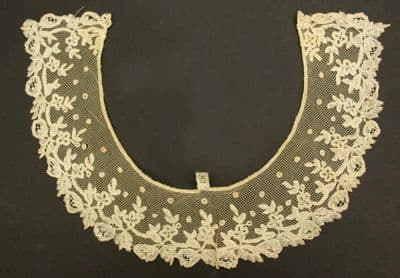
Cream Bobbin Lace Detachable Collar with Floral Pattern
Baroque · American
Production
handmade
Material
bobbin lace
Culture
American
Influences
Victorian modular dressing · European bobbin lace traditions
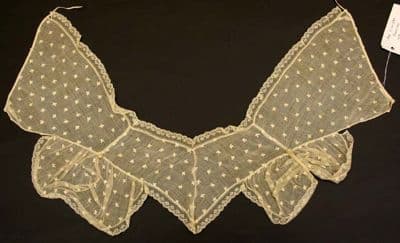
A delicate detachable collar crafted from fine bobbin lace featuring an intricate floral pattern with roses and foliage. The collar forms a complete circle with scalloped edges and demonstrates the characteristic wide, flat profile popular during the mid-19th century. The lace work shows fine mesh ground with raised floral motifs created through dense thread work. The collar would have been worn over a dress bodice, secured at the back neckline, and represents the Victorian preference for modular dress accessories that could refresh and formalize everyday garments.
scarf
Connected To
59%
Worn with·chemisetteTechnique·lacework
SHARED140 years · cross-culture
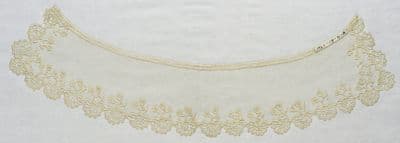
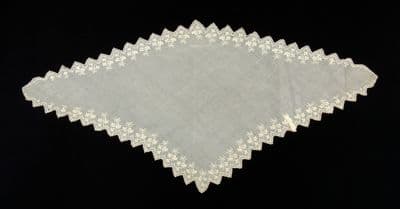
These two detachable collars reveal how the same impulse—to soften a stark neckline with delicate lacework—evolved across nearly two centuries of changing technique and taste. The earlier Baroque collar spreads wide with its dense bobbin lace blooms, each flower meticulously built from twisted threads that create an almost sculptural richness, while the later Empire piece whispers rather than declares, its sparse net appliqué flowers floating like pressed botanicals on sheer linen.
Text85%
Image82%
Entity27%
55%
Worn with·chemisetteTechnique·lacework
SHARED180 years
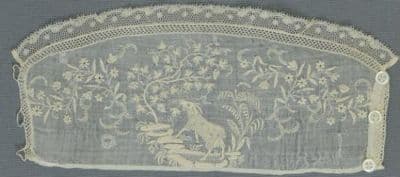
These two collars reveal how the Victorian obsession with respectability transformed lace from baroque extravagance into middle-class propriety. The earlier bobbin lace collar sprawls with dense floral motifs that seem to grow organically from the mesh ground, its scalloped edge undulating like a garden border—pure decorative abundance.
Worn with·chemisetteTechnique·lacework
SHARED170 years
These two delicate white accessories reveal how women have always found ways to soften the severity of their necklines, whether through the geometric precision of machine-made cotton lace or the flowing botanical fantasies of hand-bobbin work. The fichu's sharp sawtooth border speaks to 19th-century industrial efficiency—clean, repeatable, democratic—while the collar's sprawling floral motifs whisper of an earlier world where lacemakers spent months conjuring gardens from thread.
55%
Worn with·chemisette
SHARED190 years · cross-culture
Text68%
Image78%
Pull the Thread→
Follow this garment wherever the graph leads