THE MET
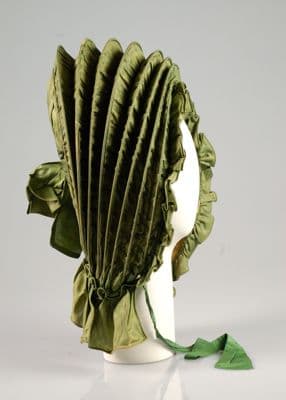
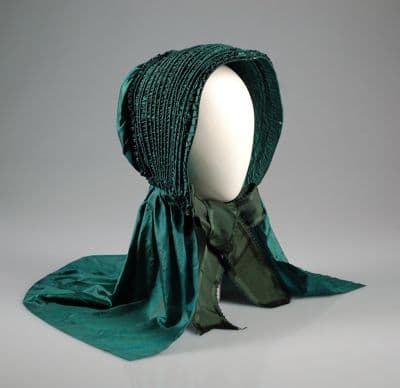
Emerald Green Silk Taffeta Mourning Bonnet
Victorian Early / Crinoline · 1850s-1870s · American
Production
handmade
Material
silk taffeta
Culture
American
Influences
1870s spoon bonnet shape
A deep emerald green silk taffeta bonnet featuring a distinctive shirred or pleated crown construction that creates vertical ridged texture across the entire head-covering portion. The bonnet has a close-fitting silhouette that would frame the face, with long silk taffeta streamers or ties that extend dramatically from the nape area. The construction shows careful gathering and stitching to create the ribbed surface effect, typical of mourning bonnets where black was often replaced with deep jewel tones during later mourning periods. The ties appear substantial enough to wrap around the neck or tie under the chin, and the overall form suggests the characteristic spoon-shaped profile of 1870s bonnet construction.
headband/head covering/hair accessory
Connected To
Worn with·mourning dressFunction·mourning
SHARED15 years · cross-culture
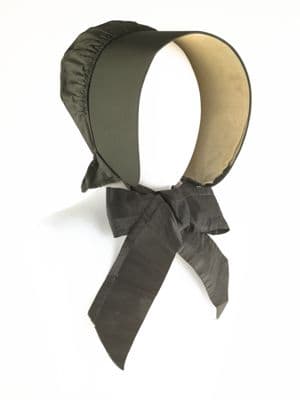
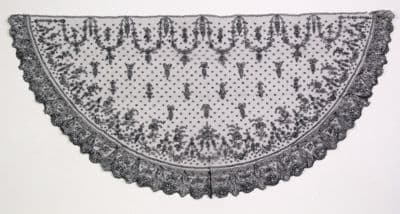
The emerald bonnet's deep hood and trailing ties speak the same language of concealment as the black lace veil's gossamer web, both designed to shroud a grieving woman's face from the world's gaze. What's striking is how the bonnet's architectural severity—that stiff taffeta shell pulled tight around the head—contrasts with the veil's delicate scalloped border that would have trembled with each breath, yet both create the same effect of partial erasure.
Text73%
Image66%
Entity28%
Worn with·mourning dressFunction·mourning
SHARED15 years · cross-culture · cross-category
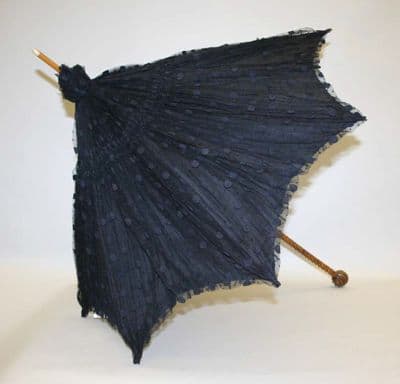
The emerald silk bonnet and black lace parasol reveal mourning's evolution from rigid ritual to nuanced performance. Where the bonnet's deep hood creates a fortress of grief—its pleated silk channeling sorrow inward like a green cocoon—the parasol's delicate black lacework suggests mourning that has learned to breathe, its frayed edges and translucent patterns allowing glimpses of light through loss.

Worn with·mourning dressFunction·mourning
SHARED85 years · cross-category
The emerald silk taffeta bonnet with its dramatic trailing ribbons and the stark black felt cap represent two distinct eras of American mourning dress, separated by nearly a century but united in their function as grief's uniform. The Victorian bonnet's luxurious fabric and elaborate construction—notice how the pleated silk creates sculptural depth around the face—speaks to an age when mourning was performance, requiring specific costumes for each stage of bereavement.
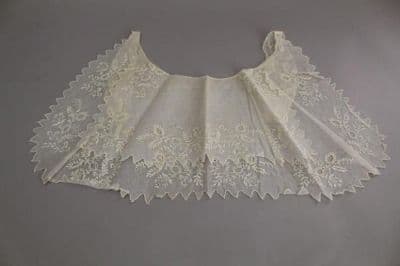
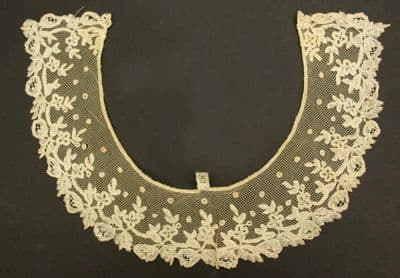
Worn with·chemisette
SHARED25 years · cross-culture · cross-category
Text55%
Image72%
Pull the Thread→
Follow this garment wherever the graph leads