THE MET
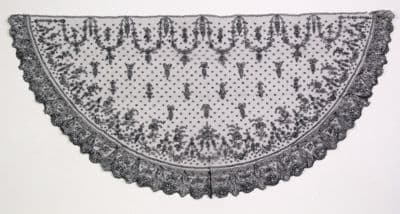
Black Silk Lace Mourning Veil
Victorian Early / Crinoline · 1840s · French
Production
handmade
Material
silk lace
Culture
French
Influences
Chantilly lace tradition
A semicircular black silk lace veil displaying intricate Chantilly-style lacework with floral and geometric motifs throughout the field. The piece features a scalloped border with dense bobbin lace edging that frames the entire curved perimeter. The main body showcases delicate floral sprays and vine patterns worked in fine silk thread against a net ground, creating areas of varying opacity. The construction demonstrates the sophisticated French lace-making techniques of the mid-19th century, with precise geometric spacing of motifs and masterful integration of solid and open areas. This type of veil would have been worn draped over the head and shoulders during periods of mourning, its length and coverage conforming to Victorian mourning etiquette.
headband/head covering/hair accessory
Connected To
Worn with·mourning bonnetWorn with·mourning dressTechnique·laceworkFunction·mourning
SHARED30 years · cross-culture · cross-category
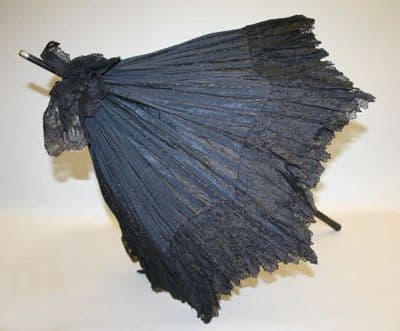
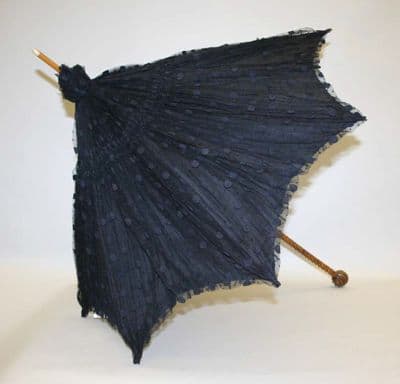
These two pieces reveal how Victorian mourning culture transformed grief into an entire aesthetic universe, where every accessory had to whisper loss in precisely the right register. The semicircular veil's intricate floral lace pattern creates a delicate screen between the wearer and the world, while the parasol's deep scalloped edge and radiating pleats turn protection from sunlight into a statement of perpetual shadow.
Text82%
Worn with·mourning bonnetWorn with·mourning dressFunction·mourning
SHARED10 years · cross-culture
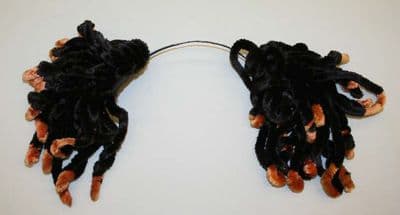
These two pieces of Victorian mourning regalia reveal how grief demanded its own elaborate vocabulary of ornament. The French lace veil transforms sorrow into geometric poetry—its intricate floral motifs and scalloped border suggesting that even death deserved beautiful craftsmanship—while the American silk tassel headdress takes a more theatrical approach, its cascading black fringe designed to catch light and movement like tears made tangible.
Worn with·mourning dressTechnique·laceworkFunction·mourning
SHARED40 years · cross-culture · cross-category
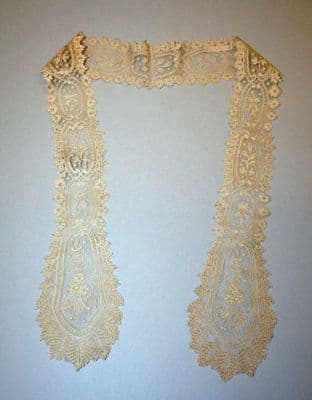
These two pieces trace the evolution of Victorian mourning etiquette through the language of lace—the earlier French veil's dense, geometric bobbin work creating an almost impenetrable black shroud, while the later American collar speaks in delicate, open paisley motifs that suggest grief softening into remembrance.
Worn with·mourning dressTechnique·laceworkFunction·mourning
SHARED30 years · cross-culture · cross-category
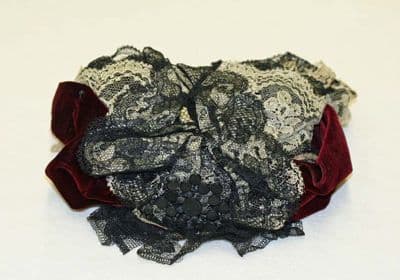
Both pieces deploy the same visual grammar of grief: black silk lace worked into delicate patterns that seem to mock their somber purpose, creating beauty from bereavement. The veil's sweeping semicircle would have draped a widow's entire silhouette in its intricate web, while thirty years later the bonnet concentrates that same lace language into a more contained statement, its ruffled architecture framing the face with deliberate drama.
Pull the Thread→
Follow this garment wherever the graph leads