THE MET
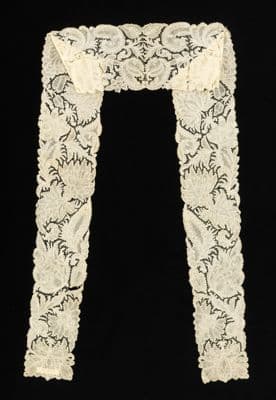
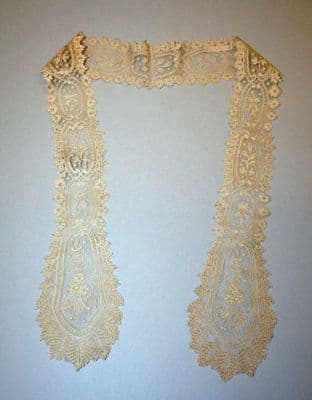
Cream Bobbin Lace Victorian Mourning Collar
Victorian Late / Bustle · 1880s · American
Production
mass-produced
Material
bobbin lace
Culture
American
Influences
French Chantilly lace tradition · Victorian mourning protocol
This is a barbe, a formal mourning collar worn by widows in the Victorian era. The piece consists of two long pendant panels connected by a curved neckband, all crafted from fine bobbin lace in an intricate floral and scroll pattern. Each panel tapers to a pointed end and features dense lacework with botanical motifs including stylized flowers, leaves, and curvilinear designs. The lace appears to be machine-made with consistent gauge and precise geometric repeats typical of 1880s production. The barbe would drape over the shoulders and down the front of a mourning dress, serving both as a symbol of widowhood and a display of refined craftsmanship during the period of formal grief.
scarf
Connected To
Influences·French Chantilly lace traditionTechnique·lacework
SHARED80 years · cross-culture · cross-category
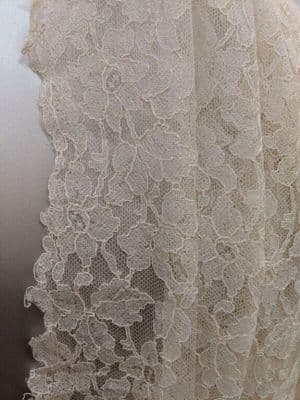
These two pieces reveal how French Chantilly lace techniques traveled the world and adapted to local needs: the Victorian collar shows the crisp geometric precision of bobbin lace with its sharp-edged paisley motifs that would frame a mourning dress with appropriate solemnity, while the Indian sari border translates that same European lacework tradition into softer floral cascades better suited to draping around the body.
Text58%
Image81%
Entity45%
Worn with·mourning dressTechnique·laceworkFunction·mourning
SHARED30 years · cross-culture · cross-category
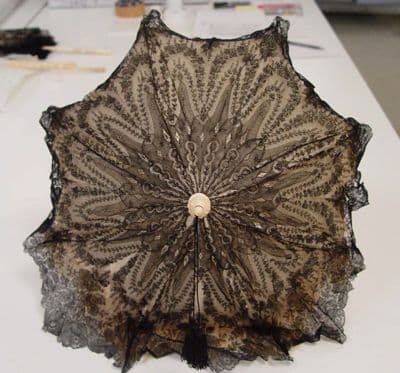
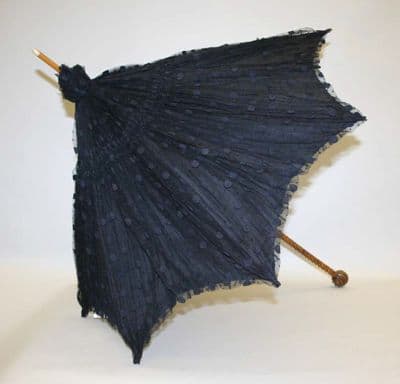
Both pieces deploy lace's strange duality—its ability to be simultaneously decorative and mournful, celebratory yet somber. The parasol's radiating spokes create a starburst of black Chantilly that would have cast appropriately melancholic shadows, while the collar's cream bobbin work forms those distinctive paisley teardrops that seem to weep down the bodice.
Worn with·mourning dressTechnique·laceworkFunction·mourning
SHARED40 years · cross-culture · cross-category
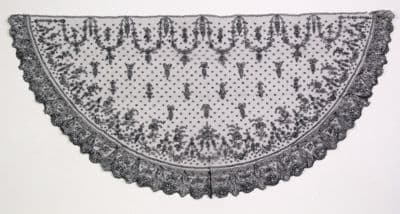
These two pieces trace the evolution of Victorian mourning etiquette through the language of lace—the earlier French veil's dense, geometric bobbin work creating an almost impenetrable black shroud, while the later American collar speaks in delicate, open paisley motifs that suggest grief softening into remembrance.
Worn with·mourning dressTechnique·laceworkFunction·mourning
SHARED10 years · cross-culture · cross-category
The mourning parasol's dense black lace creates an almost architectural canopy of grief, its intricate pattern designed to cast shadows as deliberate as the widow's social withdrawal, while the cream collar's delicate bobbin work traces paisley teardrops that would have framed a face already marked by loss.
Pull the Thread→
Follow this garment wherever the graph leads