THE MET
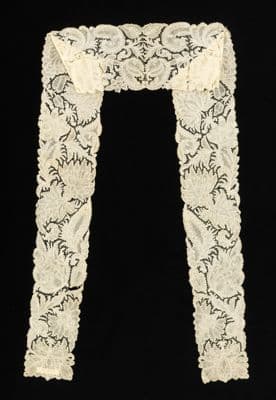
Cream Linen Flemish Lappet Cap Panels
Rococo · 1730s · Flemish
Production
handmade
Material
linen
Culture
Flemish
Influences
Flemish bobbin lace tradition
This Flemish lappet consists of two long rectangular panels connected by a curved top section, designed to hang from a woman's cap over the shoulders. The entire piece is constructed from fine linen worked in elaborate needle lace technique, creating intricate floral and foliate motifs throughout. The lace work demonstrates the characteristic rococo asymmetrical scrolling patterns with delicate botanical elements. Each panel measures approximately 18 inches in length, tapering slightly toward the bottom with scalloped edges. The connecting head piece features a curved shape to follow the cap's contour. This type of accessory was essential to formal 18th-century women's dress, adding elegance and demonstrating the wearer's social status through the expensive handwork involved.
headband/head covering/hair accessory
Connected To
Worn with·formal gownFunction·court-formal
SHARED20 years · cross-culture · cross-category
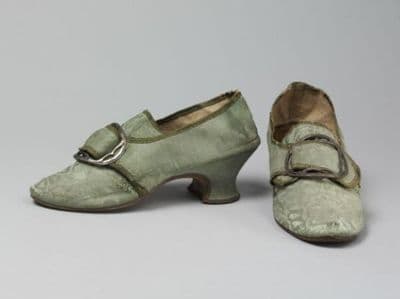
These two pieces speak the same rococo language of delicate florals and scalloped edges, but whisper it in different dialects. The lappet cap's intricate cutwork lace echoes the brocaded vines sprawling across the silk shoes, both employing that characteristic 18th-century horror vacui where every surface must bloom with ornament.
Text61%
Image70%
Entity25%
Worn with·formal gownFunction·court-formal
SHARED10 years · cross-culture · cross-category
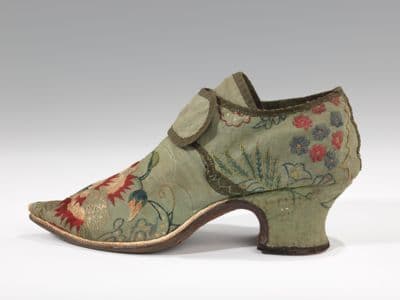
These two pieces reveal how the Rococo obsession with naturalistic ornament created a visual language that crossed every boundary of class and function. The sage brocade shoes, with their scattered blooms dancing across silk, and the linen lappet cap with its delicate vine tracery, both channel the same decorative DNA — that mid-18th-century mania for turning the human body into a walking garden.
Worn with·formal gownFunction·court-formal
SHARED10 years · cross-culture · cross-category
Text61%
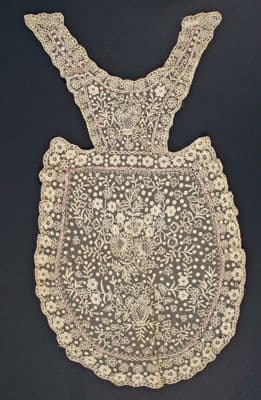
Technique·hand-embroideryTechnique·laceworkFunction·court-formal
SHARED150 years · cross-culture · cross-category
Pull the Thread→
Follow this garment wherever the graph leads