1950s · 1950s · American
Designer
Ann Lowe
Production
haute couture
Material
silk satin with lace appliqué
Culture
American
Movement
New Look / Post-War
Influences
Christian Dior New Look silhouette · couture lace appliqué techniques
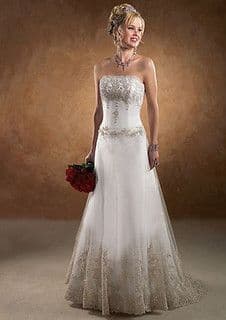
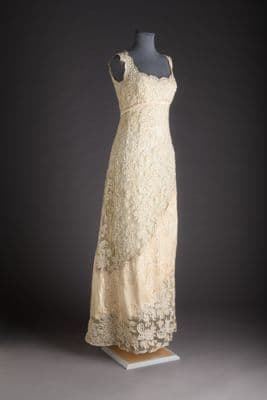
This formal gown features a fitted strapless bodice that extends into a full-length A-line silhouette characteristic of 1950s evening wear. The dress is constructed from cream-colored silk satin as the foundation, with elaborate lace appliqué work covering the entire surface. The lace creates intricate floral and scrollwork patterns that appear to be hand-applied. The skirt extends to floor length with what appears to be a slight train or extended hem treatment. The construction demonstrates sophisticated couture techniques, with the lace appliqué requiring precise placement and attachment. The overall silhouette reflects the New Look influence with its emphasis on a defined waist and full skirt, while the monochromatic cream palette and elaborate surface decoration speak to formal occasion dressing of the atomic age period.


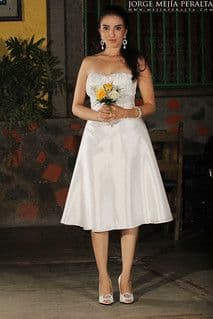
The 1950s gown's fitted bodice and dramatic mermaid flare speaks the same language as the contemporary wedding dress's strapless silhouette and lace-heavy skirt, but sixty years have softened the conversation.

Follow this garment wherever the graph leads
The 1950s gown's fitted bodice and dramatic mermaid flare speaks the same language as the contemporary wedding dress's strapless silhouette and lace-heavy skirt, but sixty years have softened the conversation.
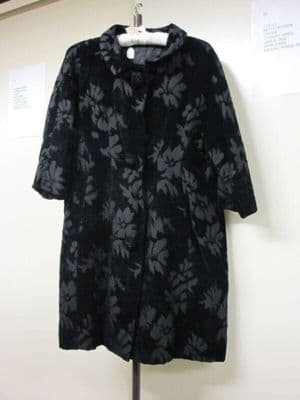
Both garments speak the same 1950s language of luxurious surface treatment, but in different dialects—the American gown whispers its opulence through delicate lace appliqué that traces the body like botanical jewelry, while the French coat announces its sophistication through the dramatic contrast of cut velvet florals against a dark ground.
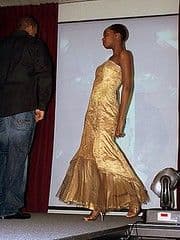
Both gowns commit to the same seductive mathematics: the mermaid silhouette that skims the torso like liquid before flaring into a dramatic train, creating that unmistakable hourglass punctuation mark. The 1950s dress achieves its glamour through intricate lace appliqué that catches light like scattered pearls, while the contemporary version strips away all ornamentation, letting the silk satin's mirror-like surface do the talking.

Both gowns commit to the same seductive mathematics: the mermaid silhouette that skims the torso like liquid before flaring into a dramatic train, creating that unmistakable hourglass punctuation mark. The 1950s dress achieves its glamour through intricate lace appliqué that catches light like scattered pearls, while the contemporary version strips away all ornamentation, letting the silk satin's mirror-like surface do the talking.