THE MET
Black Silk Lace Mourning Parasol
Victorian Early / Crinoline · 1850s · French
Production
handmade
Material
silk lace
Culture
French
Influences
Victorian mourning etiquette · French lace tradition
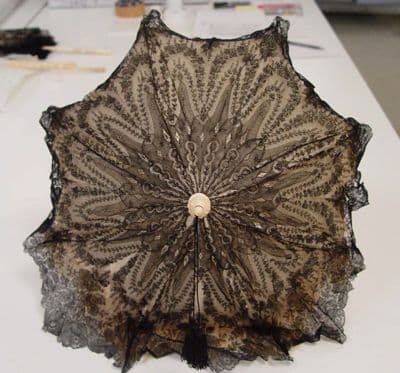
A mid-19th century mourning parasol featuring an intricate black silk lace canopy with radiating geometric patterns emanating from a central ivory or bone hub. The lace displays a complex openwork design with scalloped edges and delicate floral motifs throughout the geometric framework. The parasol's construction shows typical Victorian engineering with metal ribs supporting the fabric in precise pleated segments. The dark coloration and elaborate lacework indicate this was likely used during formal mourning periods, when black accessories were essential. The craftsmanship demonstrates the period's emphasis on decorative functionality, combining sun protection with social signaling through its ornate surface treatment and somber palette.
umbrella
Connected To
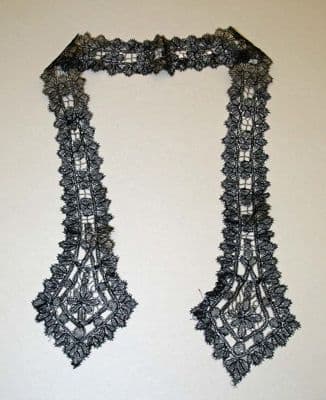
Worn with·mourning dressTechnique·laceworkFunction·mourning
SHARED20 years · cross-culture · cross-category
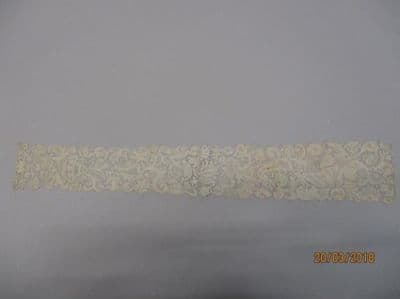
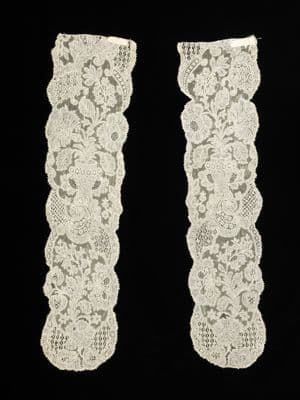
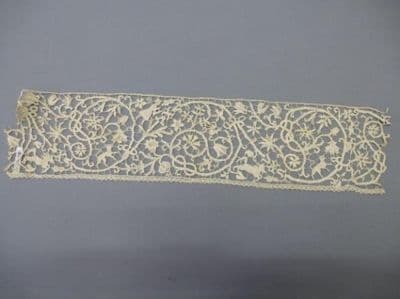
Both pieces pulse with the same Victorian obsession: turning grief into an art form through black lace so intricate it becomes architectural. The parasol's radiating spokes create a sunburst of mourning that mirrors the collar's cascading geometric patterns, each piece transforming the wearer into a walking monument to loss.
Text85%
Image79%
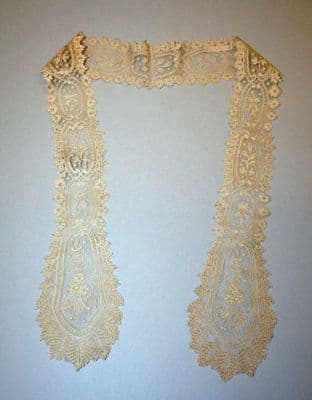
Worn with·mourning dressTechnique·laceworkFunction·mourning
SHARED30 years · cross-culture · cross-category
Both pieces deploy lace's strange duality—its ability to be simultaneously decorative and mournful, celebratory yet somber. The parasol's radiating spokes create a starburst of black Chantilly that would have cast appropriately melancholic shadows, while the collar's cream bobbin work forms those distinctive paisley teardrops that seem to weep down the bodice.
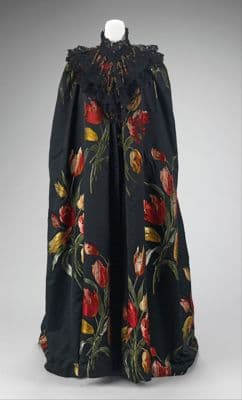
Worn with·glovesTechnique·lacework
SHARED30 years · cross-category
That Victorian mourning parasol and the tulip-embroidered evening cloak are separated by three decades and entirely different social occasions, yet both deploy the same theatrical strategy: using black as a canvas for intricate surface work that catches and plays with light.
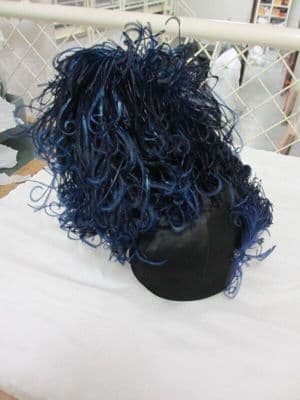
Worn with·gloves
SHARED80 years · cross-category
Text48%
Image73%
Pull the Thread→
Follow this garment wherever the graph leads