THE MET
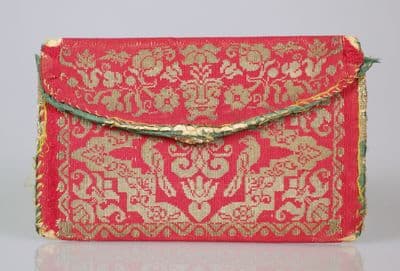
Coral Red Silk Brocade Envelope Bag
Rococo · 1780s-1820s · European
Production
artisan-craft
Material
silk brocade
Culture
European
Influences
French court textile tradition · baroque decorative arts
A rectangular envelope-style bag constructed from coral red silk brocade with elaborate gold metallic thread patterning. The textile features symmetrical baroque-style motifs including scrolling acanthus leaves, floral rosettes, and geometric cartouches woven in gold against the vibrant red ground. The bag has a simple envelope flap closure with green silk ribbon trim along the edges. The brocade shows the characteristic density and raised texture of 18th-century European luxury weaving, with the metallic threads creating dimensional surface relief. The proportions are compact and rectangular, typical of formal accessories carried at court or fashionable social gatherings during the Rococo period.
bag/wallet
Connected To
Influences·baroque decorative artsFunction·court-formal
SHARED50 years · cross-culture · cross-category
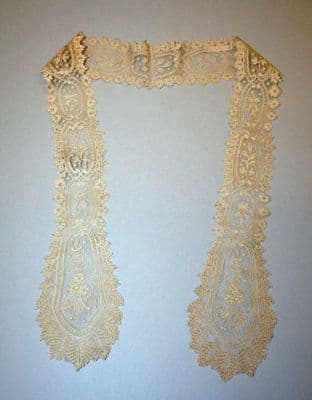
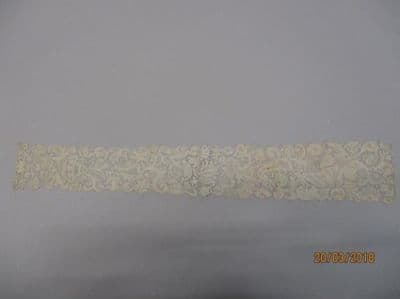
That coral brocade bag carries the same obsessive horror vacui as the Flemish lappets — every millimeter must sing with pattern, whether it's the bag's dense gold florals crowding against crimson silk or the lace's relentless botanical spirals eating up negative space. Both pieces emerge from a Baroque sensibility that equated visual complexity with social worth, but the bag's contained envelope form makes its maximalism feel almost restrained compared to the lappets' sprawling, organic chaos.
Text60%
Image69%
Entity
Influences·baroque decorative artsFunction·court-formal
SHARED60 years · cross-culture
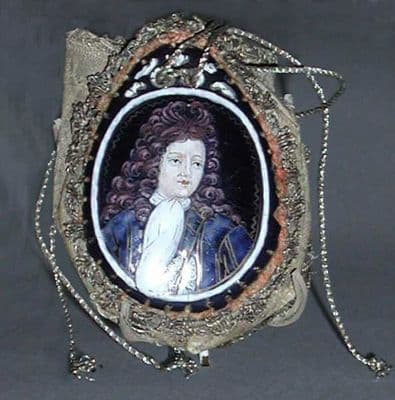
These two court purses reveal how aristocratic accessories evolved from Baroque theatricality to Rococo refinement while maintaining their essential DNA as portable status symbols. The earlier copper purse, with its oval portrait miniature nestled in elaborate metalwork, announces wealth through precious materials and personal portraiture—pure Baroque ostentation where the bag itself becomes a framed artwork.
Technique·brocade-weavingFunction·court-formal
SHARED140 years · cross-culture · cross-category
Text66%
Technique·brocade-weavingFunction·court-formal
SHARED20 years · cross-culture · cross-category
Text68%
Pull the Thread→
Follow this garment wherever the graph leads