V&A
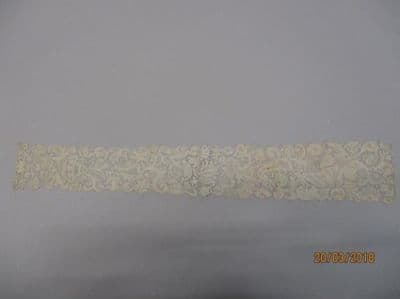
Flemish Bobbin Lace Lappets with Intricate Openwork
Baroque · 1690s · Flemish
Production
handmade
Material
bobbin lace
Culture
Flemish
Influences
Flemish bobbin lace tradition · baroque decorative arts
A delicate strip of Flemish bobbin lace featuring intricate openwork patterns created through the systematic manipulation of multiple threads on a pillow. The lace displays characteristic baroque motifs with flowing scrollwork and floral elements worked in fine linen thread. The construction shows the precise geometric foundation typical of bobbin lace, where threads are braided and twisted around pins to create the complex mesh ground and raised decorative elements. This lappet would have hung as a pendant streamer from a woman's indoor cap or fontange headdress, demonstrating the wearer's wealth through the costly handmade lace. The cream-colored thread has aged to a warm ivory tone, and the piece shows the masterful craftsmanship of Flemish lacemakers who dominated European luxury textile production during this period.
headband/head covering/hair accessory
Connected To
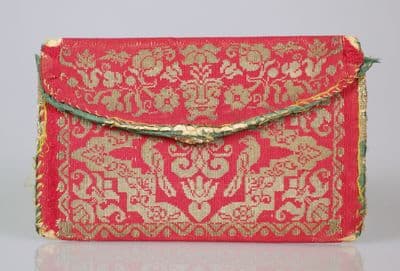
Influences·baroque decorative artsFunction·court-formal
SHARED50 years · cross-culture · cross-category
That coral brocade bag carries the same obsessive horror vacui as the Flemish lappets — every millimeter must sing with pattern, whether it's the bag's dense gold florals crowding against crimson silk or the lace's relentless botanical spirals eating up negative space. Both pieces emerge from a Baroque sensibility that equated visual complexity with social worth, but the bag's contained envelope form makes its maximalism feel almost restrained compared to the lappets' sprawling, organic chaos.
Text60%
Image69%
Entity
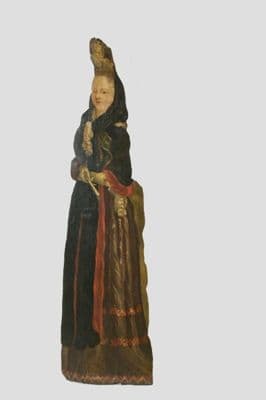
Worn with·fontange headdressFunction·court-formal
SHARED10 years · cross-culture · cross-category
The delicate bobbin lace lappets and the silk gown with its towering fontange headdress represent two sides of the same Baroque obsession with vertical drama and conspicuous craft. Those gossamer lace streamers, with their intricate floral openwork that would have taken months to complete, were designed to flutter from the very type of wire-supported headdress we see here—both serving the same function of adding precious, gravity-defying height to a court lady's silhouette.
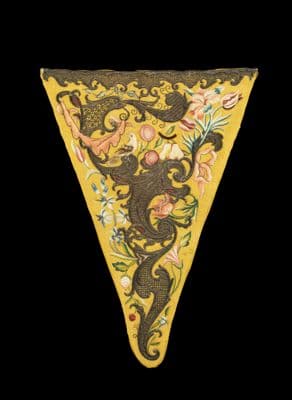
48%
Function·court-formalMotif·scroll-spiral
SHARED60 years · cross-culture · cross-category
Text61%
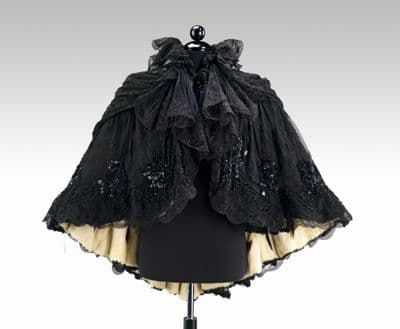
Function·court-formalMotif·scroll-spiral
SHARED190 years · cross-culture · cross-category
Text59%
Pull the Thread→
Follow this garment wherever the graph leads