V&A
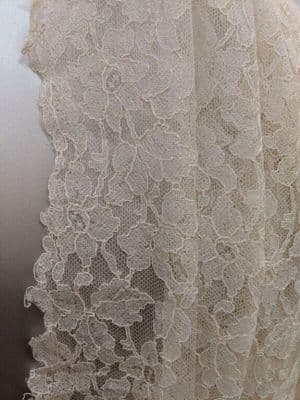
White Cotton Lace Sari with Floral Pattern
Indian Traditional · 1960s · Indian
Production
handmade
Material
cotton lace
Culture
Indian
Influences
French Chantilly lace tradition · European floral motifs
This cream-colored lace sari displays an intricate floral pattern created through machine-made lace construction. The textile shows a repeating design of large blooming flowers with detailed petals and leaves, creating an openwork pattern typical of European lace-making traditions. The fabric appears to be cotton lace with a medium-weight construction that would allow for proper draping in the traditional sari style. The scalloped edges visible along the borders indicate this was purpose-made lace yardage that has been adapted into the six-yard length required for a sari. This represents a fascinating cultural fusion where French lace-making techniques have been repurposed for Indian traditional dress during the 1960s-70s period.
dressfloor length
Connected To
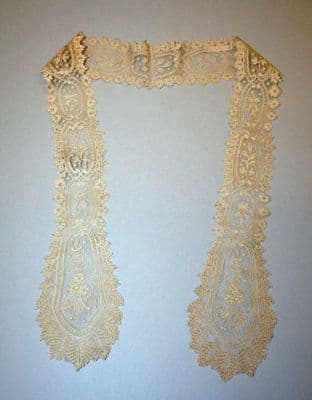
Influences·French Chantilly lace traditionTechnique·lacework
SHARED80 years · cross-culture · cross-category
These two pieces reveal how French Chantilly lace techniques traveled the world and adapted to local needs: the Victorian collar shows the crisp geometric precision of bobbin lace with its sharp-edged paisley motifs that would frame a mourning dress with appropriate solemnity, while the Indian sari border translates that same European lacework tradition into softer floral cascades better suited to draping around the body.
Text58%
Image81%
Entity45%
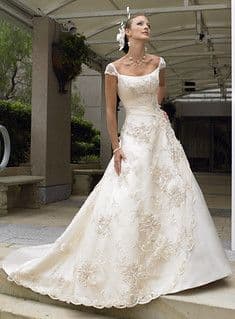
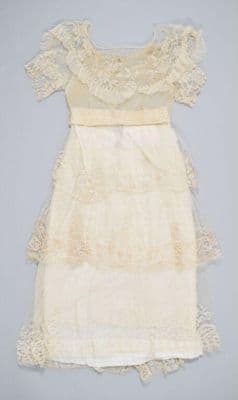
Worn with·petticoatFunction·wedding
SHARED40 years · cross-culture
Text60%
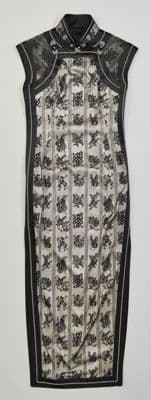
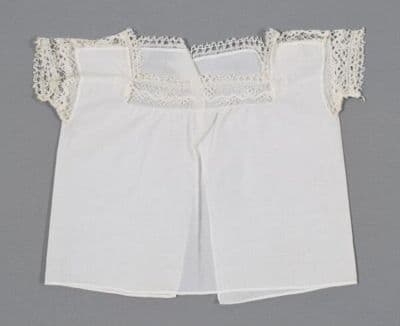
Technique·laceworkTechnique·machine-embroidery
SHARED50 years · cross-culture
Text60%
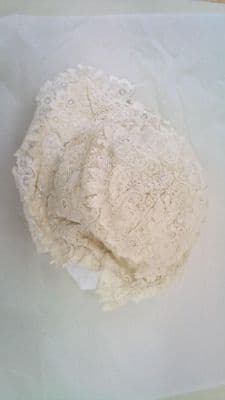
Technique·laceworkFunction·wedding
SHARED70 years · cross-culture · cross-category
Text57%
Pull the Thread→
Follow this garment wherever the graph leads