THE MET
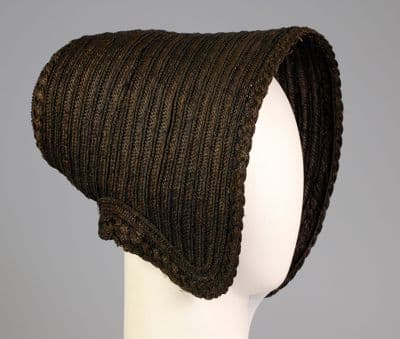
Black Straw Mourning Poke Bonnet
Victorian Early / Crinoline · 1840s · American
Production
handmade
Material
black straw
Culture
American
A deeply curved poke bonnet constructed from tightly woven black straw in narrow parallel ridges that follow the bonnet's contours. The pronounced forward projection creates a tunnel-like brim that would have shaded the wearer's face completely from side view. The straw work shows precise regularity in its ribbed texture, with each ridge approximately 2-3mm wide. The bonnet's interior curves snugly around the head, while decorative straw rosettes or knots accent the lower edge near the ear. The construction demonstrates the period's emphasis on concealing mourning dress, where the deep brim served both practical sun protection and symbolic withdrawal from social visibility during grief.
hat
Connected To
Worn with·mourning dressFunction·mourning
SHARED30 years · cross-culture · cross-category
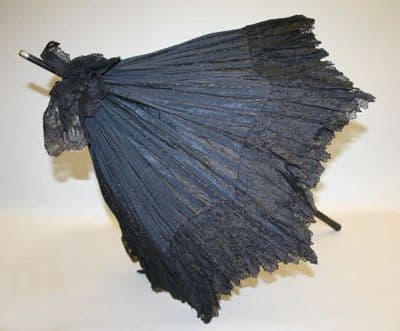
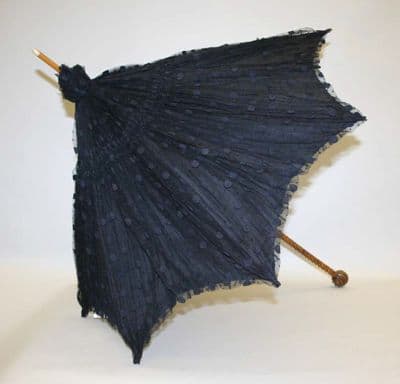
These two pieces reveal how Victorian mourning rituals demanded their own specialized accessories, each engineered for maximum dramatic effect. The bonnet's deep coal-black straw and severe poke brim create a tunnel of shadow that literally shields the wearer from the world's gaze, while the parasol's intricate black lace casts delicate patterns of darkness—grief made decorative.
Text75%
Image70%
Entity28%
Worn with·mourning dressFunction·mourning
SHARED100 years
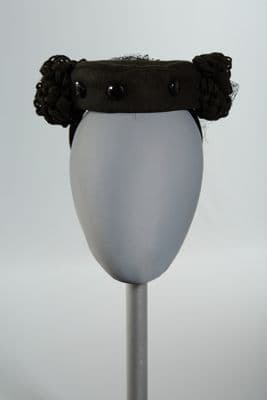
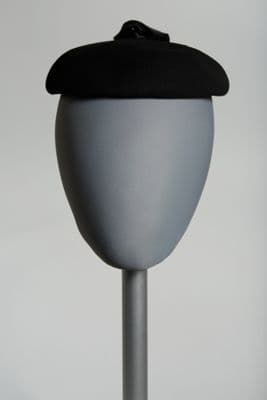
These two pieces of mourning millinery reveal how grief's sartorial requirements evolved from theatrical concealment to quiet restraint. The Victorian poke bonnet creates a dramatic tunnel of privacy with its deep, ribbed straw brim that could shield a widow's tears from public view, while the 1940s cap offers only a whisper of black felt and the suggestion of a veil.
Worn with·mourning dressFunction·mourning
SHAREDsame era · cross-culture · cross-category
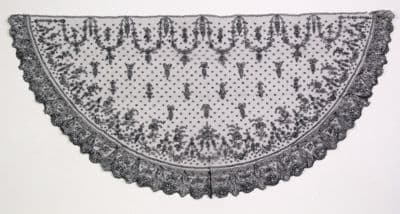
These two pieces reveal how Victorian mourning dress demanded different strategies for the same emotional theater. The French lace veil achieves its funereal drama through intricate floral motifs rendered ghostly in black silk—delicate beauty turned somber, meant to flutter and catch light while obscuring the wearer's face.
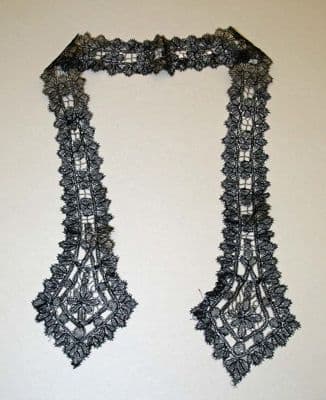
Worn with·mourning dressFunction·mourning
SHARED30 years · cross-category
These two pieces trace the evolution of Victorian mourning's visual language from the 1850s bonnet's stark, architectural severity to the 1880s collar's intricate lace theatricality.
Pull the Thread→
Follow this garment wherever the graph leads