SMITHSONIAN
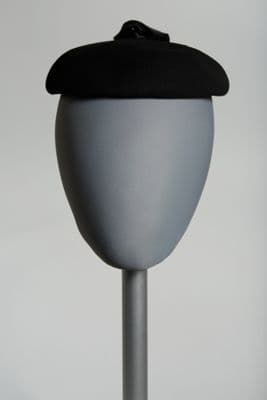
Black Fur Felt Mourning Cap with Veil
Wartime / Utility Fashion · 1940s · American
Production
handmade
Material
fur felt
Culture
American
Influences
Victorian mourning dress traditions
A small black fur felt cap designed to sit close to the head, featuring a distinctive curved brim that extends forward over the forehead. The cap has a rounded crown with subtle gathering or pleating at the back, creating a fitted silhouette. A black ribbon band encircles the base of the crown, and a fine black veil drapes from the back edge. The construction shows careful millinery work with clean seaming and precise shaping. This style reflects wartime mourning dress conventions when materials were rationed but proper mourning attire remained socially important, particularly in African American communities where formal dress codes held strong cultural significance.
hat
Connected To
Worn with·mourning dressFunction·mourning
SHARED100 years
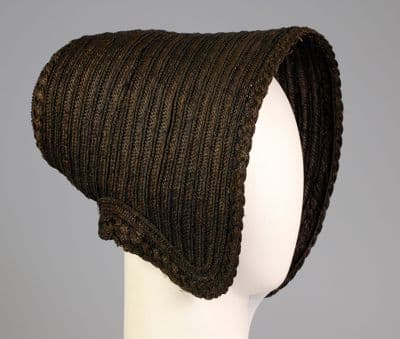
These two pieces of mourning millinery reveal how grief's sartorial requirements evolved from theatrical concealment to quiet restraint. The Victorian poke bonnet creates a dramatic tunnel of privacy with its deep, ribbed straw brim that could shield a widow's tears from public view, while the 1940s cap offers only a whisper of black felt and the suggestion of a veil.
Text75%
Entity28%
Worn with·mourning dressFunction·mourning
SHARED90 years · cross-category
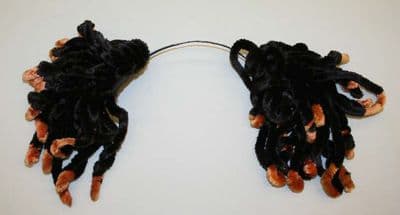
These two pieces trace the evolution of American mourning dress from theatrical grief to restrained sorrow. The Victorian headdress with its cascade of silk tassels and orange accents speaks to an era when mourning was performance—elaborate, visible, almost decorative in its drama.
Worn with·mourning dressFunction·mourning
SHARED85 years · cross-category
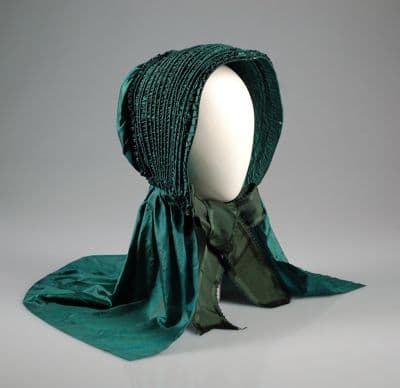
The emerald silk taffeta bonnet with its dramatic trailing ribbons and the stark black felt cap represent two distinct eras of American mourning dress, separated by nearly a century but united in their function as grief's uniform. The Victorian bonnet's luxurious fabric and elaborate construction—notice how the pleated silk creates sculptural depth around the face—speaks to an age when mourning was performance, requiring specific costumes for each stage of bereavement.
Worn with·mourning dressFunction·mourning
SHARED70 years
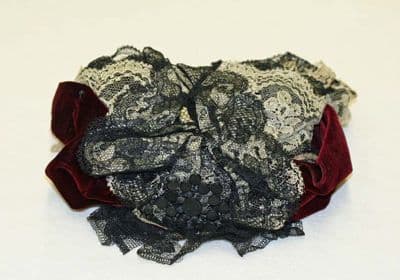
These two mourning caps trace the evolution of grief's uniform across seven decades, from the Victorian bonnet's elaborate lace cascade to the 1940s cap's stark felt dome. The earlier piece treats sorrow as spectacle—its black silk lace unfurls like baroque theater, demanding attention and reverence—while the wartime cap compresses mourning into a tight, practical skull that acknowledges loss without ceremony.
Pull the Thread→
Follow this garment wherever the graph leads