THE MET
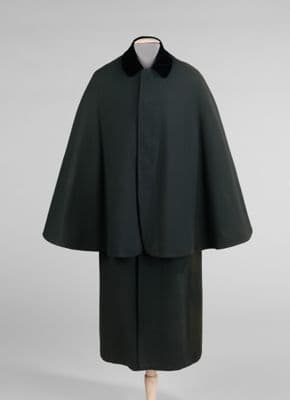
Forest Green Wool Evening Cloak with Black Velvet Collar
Victorian Late / Bustle · 1860s-1880s · Unknown
Production
handmade
Material
wool broadcloth
Culture
Unknown
A formal evening cloak constructed in deep forest green wool broadcloth with black velvet collar trim. The garment features a dramatic cape silhouette that extends to mid-calf length, with wide, flowing sleeves that create a circular drape when arms are extended. The high stand collar is finished in black velvet, providing textural contrast against the matte wool surface. The cloak fastens at the neck with what appears to be a hook-and-eye closure concealed beneath the collar. The substantial weight of the broadcloth creates clean, structured lines while allowing graceful movement. This type of enveloping outer garment was essential for Victorian evening wear, providing warmth and modesty over elaborate gowns while maintaining an imposing, dignified silhouette appropriate for formal social occasions.
capetentknee length
Connected To
66%
Worn with·evening gownWorn with·glovesFunction·court-formal
SHARED10 years · cross-culture
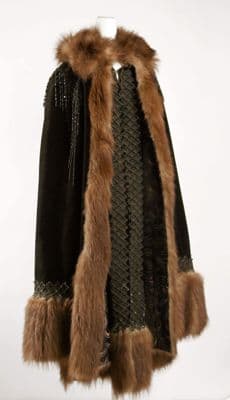
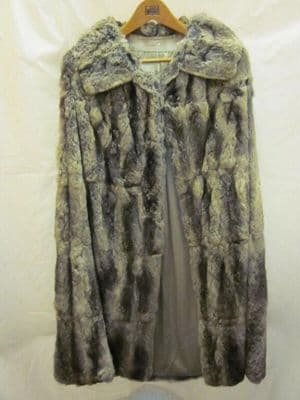
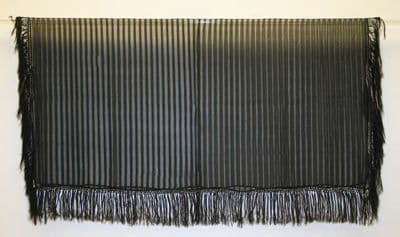
These two Victorian cloaks reveal how the same aristocratic silhouette could speak entirely different languages of luxury. The forest green wool cape with its severe black velvet collar announces itself through architectural restraint—that dramatic bell shape needs no ornament when the proportions are this commanding. A decade later, the black velvet mantle abandons such Puritan discipline for full sensual theater, every edge fringed with fur that catches light like a living thing.
Text71%
Image81%
66%
Worn with·evening gownWorn with·glovesFunction·court-formal
SHAREDsame era · cross-culture · cross-category
56%
Worn with·glovesFunction·court-formal
SHAREDsame era · cross-culture
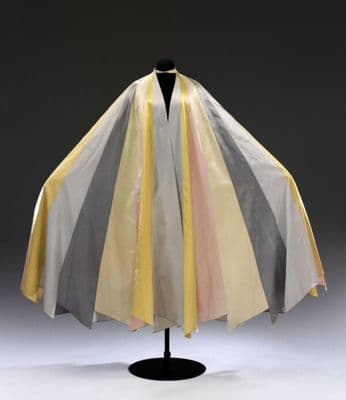
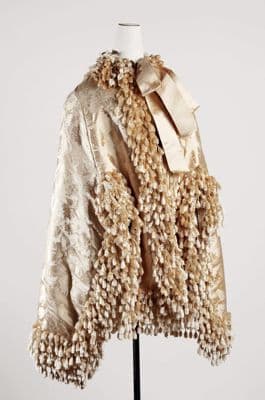
These Victorian capes reveal how the same silhouette could telegraph entirely different social codes through surface treatment alone. The severe green wool with its stark black velvet collar reads like armor for serious occasions—court presentations or formal mourning—while the cream silk drowning in cascading loop fringe is pure theater, designed to catch light and whisper with every movement.
51%
Worn with·evening gownFunction·court-formal
SHARED40 years · cross-culture
Text62%
Pull the Thread→
Follow this garment wherever the graph leads