THE MET
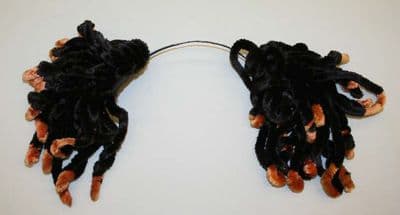
Black Silk Tassel Victorian Mourning Headdress
Victorian Early / Crinoline · 1850s · American
Production
handmade
Material
silk
Culture
American
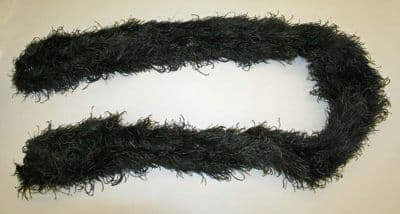
A Victorian mourning headdress consisting of a thin wire headband supporting two large clusters of black silk tassels or fringe elements positioned at the temples. Each cluster features multiple strands of black silk cord or yarn, interwoven with orange silk accents that create a subtle color variation within the predominantly black composition. The tassels hang in loose, flowing bundles that would frame the wearer's face. The wire construction allows the piece to maintain its shape while being lightweight enough for extended wear. This type of accessory was typical of mid-19th century mourning dress, where black dominated but small touches of color were sometimes permitted.
headband/head covering/hair accessory
Connected To
Worn with·mourning bonnetWorn with·mourning dressFunction·mourning
SHARED20 years · cross-culture · cross-category
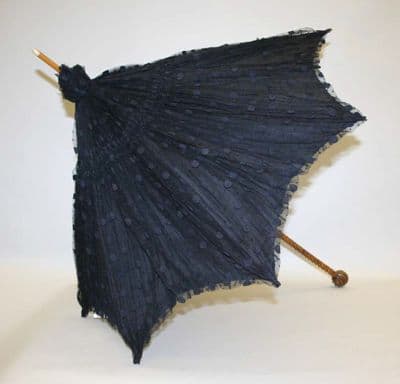
These two mourning accessories reveal how Victorian grief culture evolved from theatrical display to subtle sophistication. The earlier headdress, with its wild cascade of black silk tassels tipped in amber beads, announces loss with an almost primitive intensity—those unruly strands would have trembled with every movement, making mourning impossible to ignore.
Text80%
Image69%
Worn with·mourning bonnetWorn with·mourning dressFunction·mourning
SHARED10 years · cross-culture
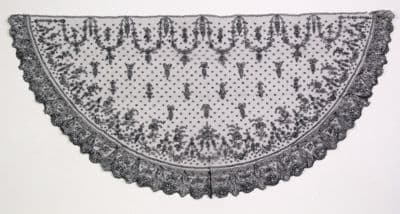
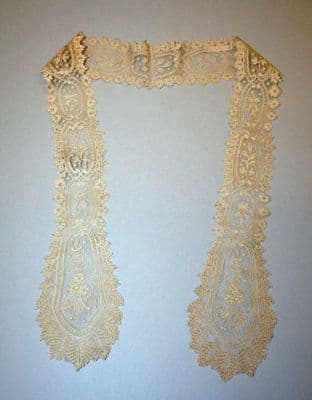
These two pieces of Victorian mourning regalia reveal how grief demanded its own elaborate vocabulary of ornament. The French lace veil transforms sorrow into geometric poetry—its intricate floral motifs and scalloped border suggesting that even death deserved beautiful craftsmanship—while the American silk tassel headdress takes a more theatrical approach, its cascading black fringe designed to catch light and movement like tears made tangible.
Worn with·mourning dressFunction·mourning
SHARED90 years · cross-category
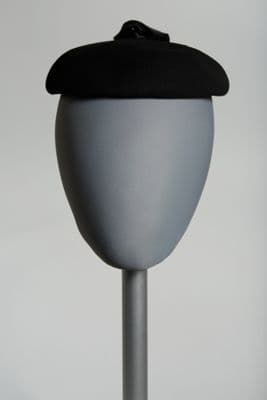
These two pieces trace the evolution of American mourning dress from theatrical grief to restrained sorrow. The Victorian headdress with its cascade of silk tassels and orange accents speaks to an era when mourning was performance—elaborate, visible, almost decorative in its drama.
Worn with·mourning dressFunction·mourning
SHARED30 years · cross-category
These two pieces trace mourning dress's evolution from theatrical grief to restrained remembrance. The earlier headdress, with its cascading black silk tassels meant to frame a widow's face in dramatic shadow, belongs to the 1850s when mourning was performance—visible, consuming, almost operatic in its display of loss.
Pull the Thread→
Follow this garment wherever the graph leads