V&A
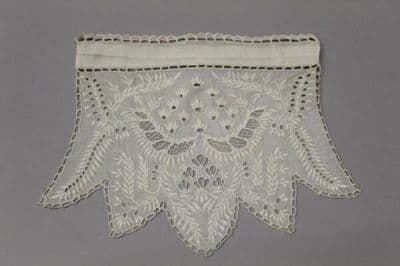
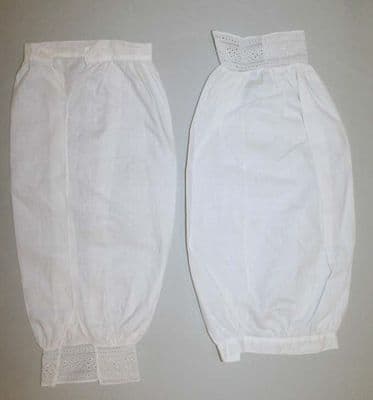
Embroidered Muslin Cuffs with Needle Lace Trim
Romantic · 1830s · British
Production
handmade
Material
embroidered muslin with needle lace
Culture
British
Influences
Romantic era whitework embroidery · detachable sleeve accessories
These delicate muslin cuffs feature intricate white-on-white embroidery worked in floral and foliate patterns across the main body. The cuffs are constructed with a fitted band that would encircle the wrist, extending into elaborate scalloped panels that would fall over the hand. Fine needle lace edges define the decorative borders with precise geometric stitching. The embroidery appears to be whitework, possibly incorporating techniques like satin stitch and French knots to create dimensional floral motifs. The muslin ground fabric is fine and semi-sheer, typical of high-quality cotton textiles of the Romantic period. These cuffs would have been worn as detachable accessories to enhance the sleeves of day dresses, representing the era's preference for elaborate surface decoration and feminine detail work.
glove
Connected To
Worn with·chemisetteWorn with·day dressTechnique·hand-embroideryTechnique·lacework
SHAREDsame era · cross-culture
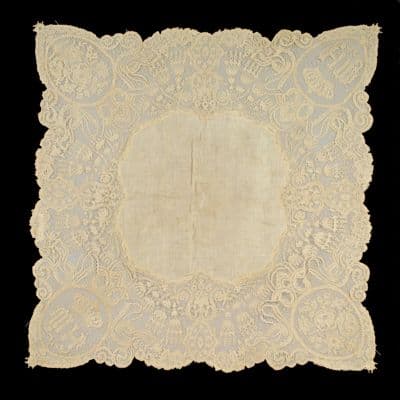
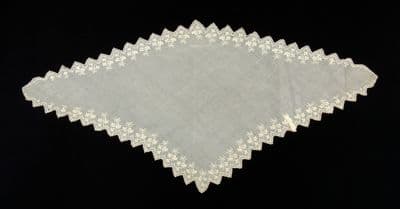
These two pieces reveal how the Romantic era's obsession with delicate handwork created a universal language of femininity that crossed the Atlantic. The American fichu's precise geometric cutwork and that sawtooth scalloped edge speak the same dialect as the British cuffs' flowing floral embroidery and needle lace points—both demanding hours of invisible labor to achieve an effect of effortless refinement.
Text65%
Worn with·chemisetteTechnique·lacework
SHARED20 years · cross-culture
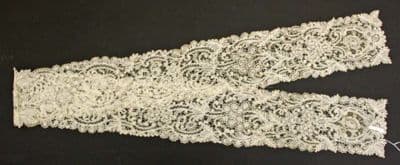
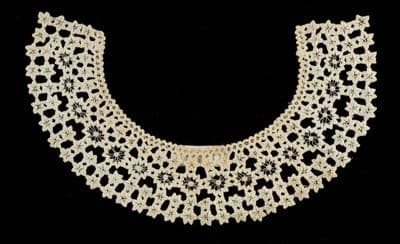
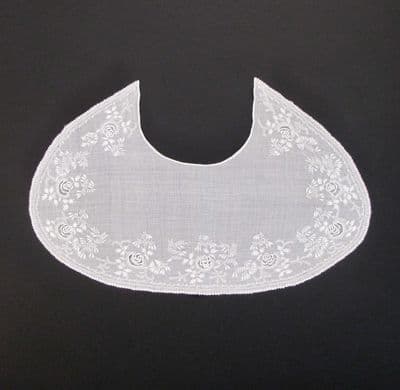
These two pieces speak the same language of Victorian propriety dressed up in virtuosic handwork—the collar's dense bobbin lace creating an almost architectural lattice of tiny flowers, while the cuffs deploy crisp white-on-white embroidery punctuated by those dramatic scalloped edges in needle lace. Both were designed to peek out from darker garments, transforming the mundane necessity of covering wrists and throat into opportunities for showing off serious needlework skills.
Worn with·chemisetteTechnique·lacework
SHARED20 years · cross-culture
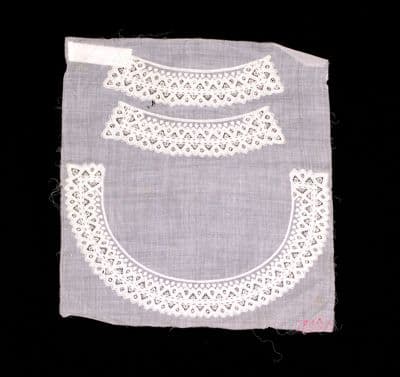
These two pieces of neckwear reveal how Victorian propriety demanded the same solution on both sides of the Channel: transforming a plain dress into something respectable with detachable white lacework. The French bobbin lace collar floats its geometric chevrons like architectural trim, while the British needle lace cuffs bloom with botanical motifs that seem to grow from the muslin ground.
Worn with·day dressTechnique·hand-embroidery
SHARED30 years · cross-culture · cross-category
Text70%
Pull the Thread→
Follow this garment wherever the graph leads