THE MET
Cream Linen Detachable Lace Collar
Victorian Early / Crinoline · 1850s · Belgian
Production
handmade
Material
linen
Culture
Belgian
Influences
Belgian bobbin lace tradition
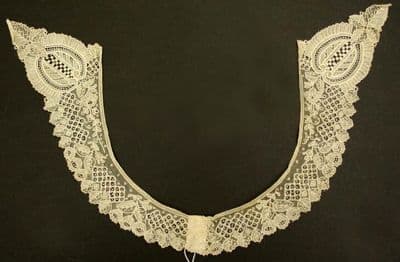
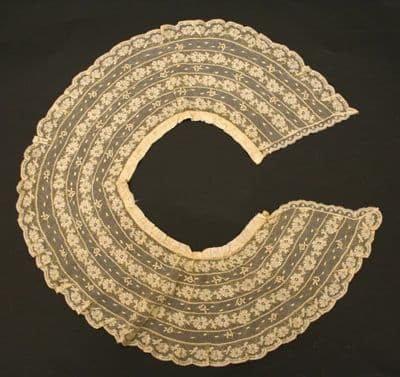
This detachable collar features intricate bobbin lace construction typical of Belgian lacemaking traditions. The collar forms a deep U-shape with elaborate scalloped edges and geometric mesh patterns throughout. Multiple lace techniques are visible including dense floral motifs, open mesh grounds, and raised relief work. The collar would have been worn over a dress bodice, secured at the neckline, providing an elegant decorative element that could be removed for laundering. The cream-colored linen thread shows fine gauge work with complex geometric and botanical patterns characteristic of mid-19th century European lace production.
scarf
Connected To
Worn with·chemisetteWorn with·dress bodiceTechnique·lacework
SHARED190 years · cross-culture
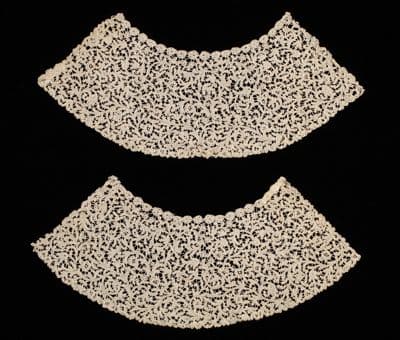
These two detachable collars reveal how the Victorian obsession with respectability borrowed heavily from Baroque grandeur, translating courtly excess into middle-class propriety. The earlier Baroque collar sprawls with architectural ambition—its bobbin lace cascading in theatrical tiers that would have framed a décolletage with operatic drama—while the Victorian version tightens that same decorative impulse into a prim crescent that sits primly at the throat.
Text92%
Image69%
Influences·Belgian bobbin lace traditionTechnique·lacework
SHARED20 years · cross-culture
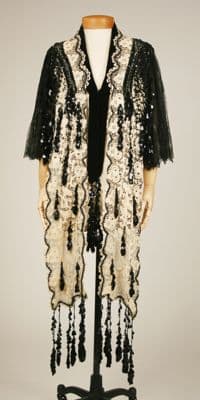
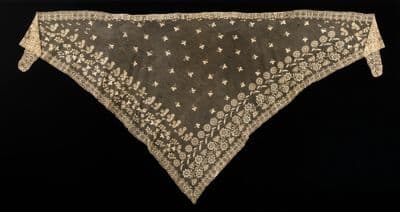
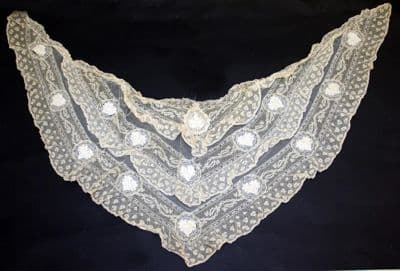
These two pieces trace the evolution of Belgian bobbin lace from grand gesture to intimate detail. The triangular shawl spreads its intricate geometric patterns across a full canvas — those tiny floral motifs scattered like stars against the mesh ground, bordered by elaborate scrollwork that announces itself from across a room.
Influences·Belgian bobbin lace traditionTechnique·lacework
SHARED30 years
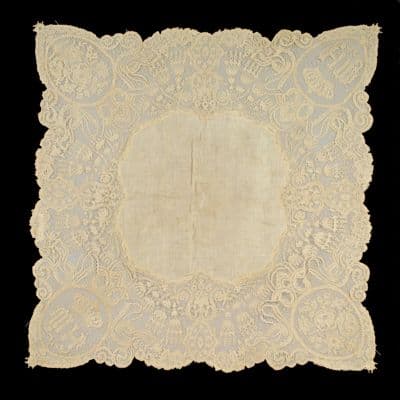
These two pieces trace the evolution of Belgian bobbin lace from necessity to ornament across the Victorian era.
Worn with·chemisetteTechnique·lacework
SHARED5 years · cross-culture
Both pieces speak the same Victorian language of respectability through intricate handwork, but they solve different problems of propriety. The Belgian collar's geometric bobbin lace creates a crisp frame for the face, while the triangular fichu's softer needle lace cascades in romantic scallops designed to fill a low neckline.
Echoes Across Time
Victorian Early / Crinoline → Baroque · 190yr72%
SHARED
These two detachable collars reveal how the Victorian obsession with respectability borrowed heavily from Baroque grandeur, translating courtly excess into middle-class propriety. The earlier Baroque collar sprawls with architectural ambition—its bobbin lace cascading in theatrical tiers that would have framed a décolletage with operatic drama—while the Victorian version tightens that same decorative impulse into a prim crescent that sits primly at the throat.
Worn with·chemisetteWorn with·dress bodiceTechnique·lacework
Pull the Thread→
Follow this garment wherever the graph leads