THE MET
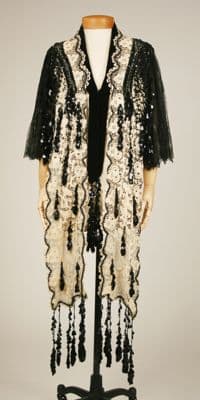
Black Silk Evening Mantle with Sequins and Lace
Belle Epoque · 1900s-1910s · French
Production
haute couture
Material
silk with sequins and lace
Culture
French
Movement
Art Nouveau
Influences
Oriental kimono styling · Art Nouveau decorative motifs
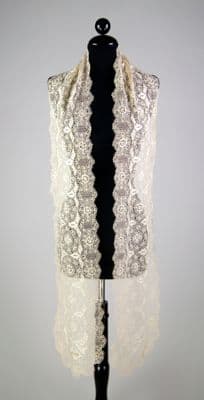
This Belle Époque evening mantle features a dramatic contrast between black and cream materials. The garment displays an intricate lace overlay with geometric and floral motifs covering the cream silk base. Heavy black sequined or beaded trim creates bold vertical lines and decorative borders throughout the design. The mantle has a loose, cape-like construction with three-quarter length sleeves and extends to approximately knee length. Long tasseled ties or cords hang from the front closure, adding movement and ornamental detail. The piece demonstrates the period's love of elaborate surface decoration and the layering of multiple textile techniques on a single garment.
capeloose fitfloor length
Connected To
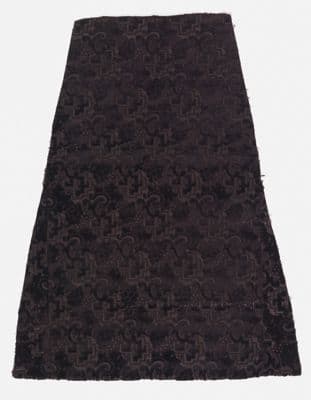
Movement·Art NouveauFunction·formal-evening
SHARED10 years · cross-culture · cross-category
These two pieces reveal how Art Nouveau's obsession with organic forms translated differently across the Atlantic: the French mantle's lace cascades like Spanish moss or seaweed, its black sequins catching light like dewdrops on intricate botanical filigree, while the American skirt panel transforms the same naturalistic impulse into a dense, almost Gothic tapestry of cut velvet flowers.
Pull the Thread→
Follow this garment wherever the graph leads