V&A
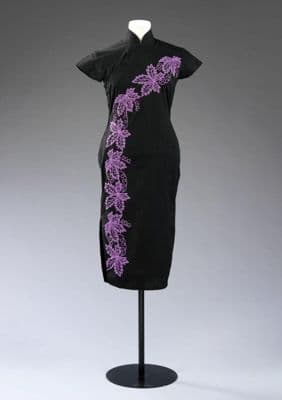
Black Silk Cheongsam with Purple Embroidered Vine Leaves
1950s · 1950s · Hong Kong Chinese
Production
ready-to-wear
Material
black silk
Culture
Hong Kong Chinese
Movement
New Look / Post-War
Influences
traditional Chinese qipao · 1950s Western tailoring
A sleek black silk cheongsam featuring a high mandarin collar and cap sleeves. The dress follows the body's natural silhouette with a fitted bodice and straight skirt that falls to mid-calf length. A dramatic diagonal cascade of machine-embroidered purple vine leaves flows from the right shoulder down across the torso to the left hip, creating visual movement against the solid black ground. The traditional Chinese collar stands upright, and the garment appears to have side seam construction typical of 1950s qipao tailoring. The embroidery shows dimensional quality with varied purple tones creating depth in the foliate motifs.
dresspencilhigh neckknee length
Connected To
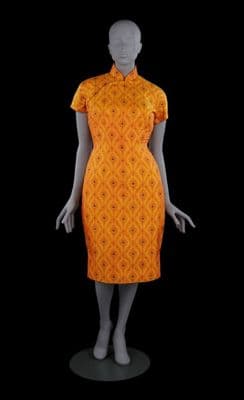
78%
Influences·1950s Western tailoringInfluences·traditional Chinese qipaoMovement·
Echoes Across Time
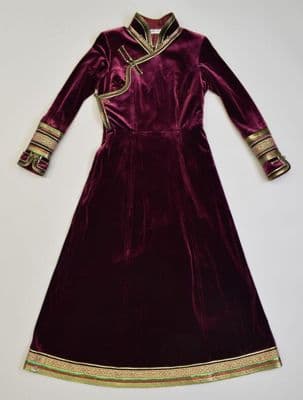
1950s → 2000s · 50yr57%
SHARED
These two garments trace the evolution of the qipao's high mandarin collar and fitted silhouette across half a century, but their surfaces tell different stories of cultural translation. The 1950s cheongsam keeps its embroidered purple florals delicate and serpentine against black silk, maintaining the restrained elegance that made the style exportable to Hong Kong's cosmopolitan scene.
Influences·traditional Chinese qipao
1970s → 1950s · 70yr46%
Pull the Thread→
Follow this garment wherever the graph leads