V&A
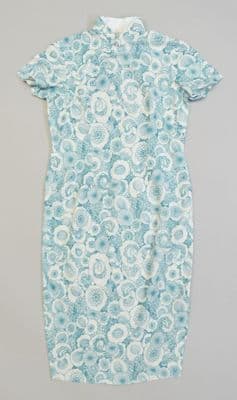
Light Blue Jersey Qipao with White Floral Print
1970s · 1960s · Hong Kong Chinese
Production
ready-to-wear
Material
synthetic jersey
Culture
Hong Kong Chinese
Movement
Hippie / Counterculture
Influences
traditional Chinese qipao · 1960s mod silhouette
A fitted qipao dress in light blue synthetic jersey featuring an all-over white floral print. The dress displays the characteristic qipao silhouette with a high mandarin collar, short sleeves, and a straight, body-skimming cut that falls to knee length. The synthetic jersey fabric allows for stretch and comfort while maintaining the dress's structured appearance. The white floral motifs appear to be stylized blooms and leaves scattered across the blue ground in a repeating pattern. The collar stands upright in traditional qipao fashion, and the overall construction shows machine-sewn seams typical of ready-to-wear production from this period.
dressstraightknee length
Connected To

Influences·1960s mod silhouette
SHARED60 years · cross-culture
These two dresses reveal how the qipao's sleek, body-conscious silhouette migrated into Western fashion's DNA, surfacing decades later in unexpected forms. The 1970s Hong Kong qipao with its high neckline, fitted bodice, and knee-length hem established the template that the contemporary black lace dress echoes—same architectural precision, same celebration of the female form through strategic restraint.
Text
Pull the Thread→
Follow this garment wherever the graph leads