SMITHSONIAN
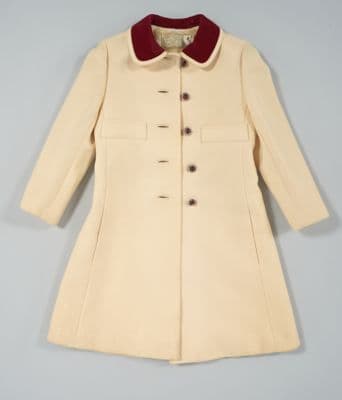
Cream Wool A-Line Coat with Burgundy Velvet Collar
1960s · 1960s · American
Production
ready-to-wear
Material
wool
Culture
American
Movement
Space Age
Influences
1960s mod silhouette · Peter Pan collar styling
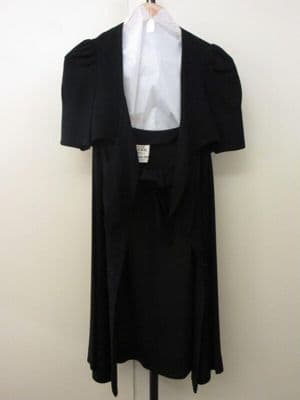
This cream wool coat features a classic A-line silhouette characteristic of 1960s tailoring. The garment has a fitted bodice that flares gently from the waist to create a trapeze shape. A burgundy velvet Peter Pan collar provides color contrast and textural interest. The coat closes with a center front button placket featuring what appear to be decorative rhinestone or crystal buttons. Two patch pockets are positioned at hip level. The three-quarter length sleeves and knee-length hemline reflect the mod-influenced proportions popular during the Atomic Age. The construction shows precise tailoring with clean lines and structured shaping typical of quality ready-to-wear garments of the period.
coata-lineknee length
Connected To
Influences·1960s mod silhouetteMovement·Space Age
SHAREDsame era · cross-culture · cross-category
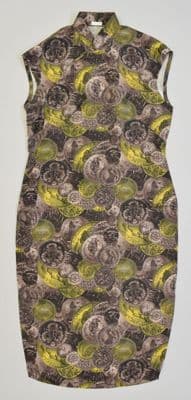
That cream coat with its burgundy velvet collar and the chartreuse qipao both pulse with the same 1960s voltage—clean lines that slice away Victorian fuss in favor of geometric precision. The coat's A-line flare and the qipao's sleek column both reject the wasp waist for a new kind of body-skimming modernism, one rooted in the Space Age obsession with streamlined forms.
Echoes Across Time
1960s → 2020s · 60yr64%
SHARED
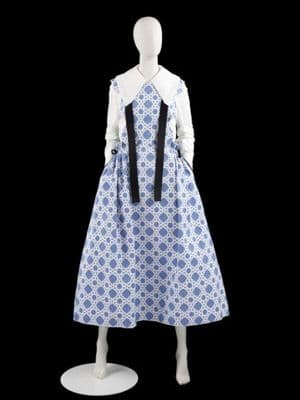
These two pieces reveal how the Peter Pan collar's innocent charm has evolved from mid-century propriety to contemporary whimsy. The 1960s coat uses its burgundy velvet collar as a dignified accent against cream wool—a grown-up take on girlish details that defined the era's ladylike rebellion.
Influences·Peter Pan collar styling
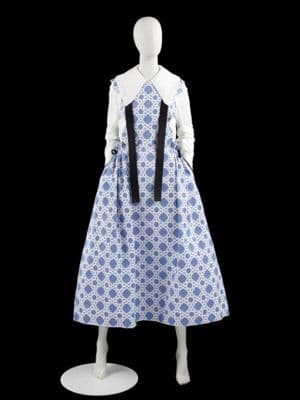
1960s → 2020s · 60yr64%
SHARED
Pull the Thread→
Follow this garment wherever the graph leads