V&A
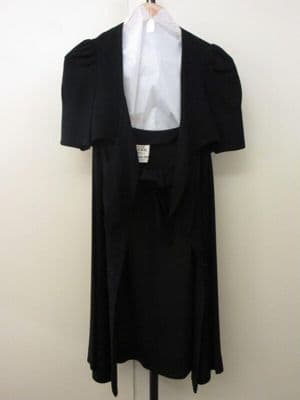
Black Moss Crepe Mini Dress White Bib
1970s · 1960s · British
Production
ready-to-wear
Material
moss crepe
Culture
British
Movement
Mod · Hippie / Counterculture
Influences
mod color-blocking · Peter Pan collar styling
A black mini dress featuring a distinctive white bib-style front panel that creates a stark contrast against the dark fabric. The dress has a simple A-line silhouette that falls well above the knee, characteristic of 1960s youth fashion. The white front section appears to be a separate panel or dickey-style insert, creating the illusion of a shirt worn underneath. The moss crepe fabric provides a matte finish with subtle texture. Short sleeves and a modest neckline keep the focus on the graphic color-blocking effect. This style reflects the mod influence on late 1960s fashion, with its clean lines and bold geometric contrast between black and white elements.
dressa-linev-neckmini
Connected To
Influences·Peter Pan collar styling
SHARED60 years · cross-culture
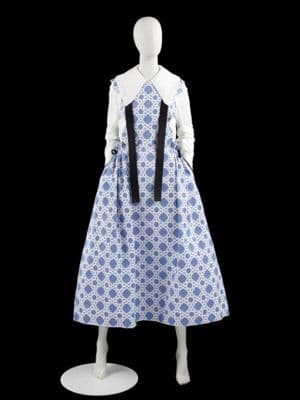
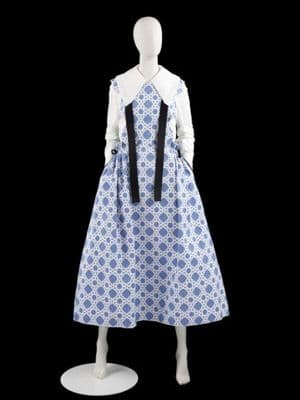
These two dresses are locked in conversation across five decades, both wielding the Peter Pan collar as their secret weapon of subversion. The 1970s British mini deploys its white bib collar like armor against a severe black backdrop—a sharp contrast that turns schoolgirl sweetness into something more knowing and rebellious.
Echoes Across Time
1970s → 2020s · 60yr65%
SHARED
These two dresses speak the same visual language across five decades: the crisp white bib front that cuts through dark fabric like a declaration of intent. The 1970s British moss crepe mini uses its white panel as pure geometry—a stark rectangular interruption that feels almost Mondrian-esque against the black ground.
Influences·Peter Pan collar styling
2020s → 1970s · 60yr65%
SHARED
Pull the Thread→
Follow this garment wherever the graph leads