V&A
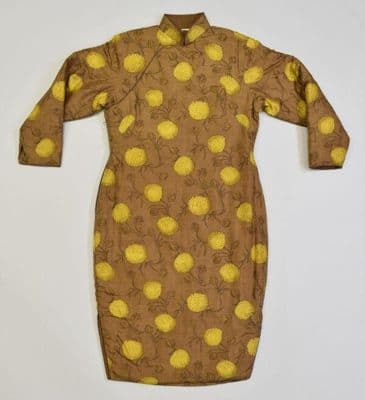
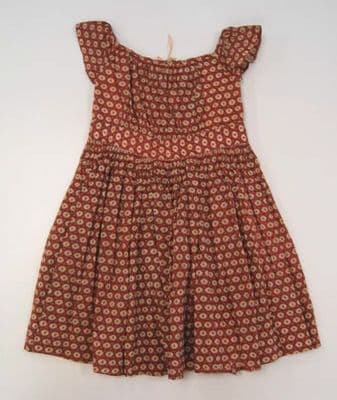
Brown Silk Qipao with Yellow Circular Motifs
1970s · 1960s · Hong Kong Chinese
Production
ready-to-wear
Material
silk
Culture
Hong Kong Chinese
Movement
Hippie / Counterculture
Influences
traditional Chinese qipao · 1960s mod polka dots
A fitted silk qipao featuring a brown base with scattered yellow circular motifs throughout the fabric. The dress displays the characteristic high mandarin collar and form-fitting silhouette that follows the body's natural lines without excessive ease. Three-quarter length sleeves end at the forearm, and the hemline falls to knee length. The yellow dots appear to be woven or printed in a regular polka dot pattern across the entire garment. Diagonal quilting lines create a subtle geometric texture across the surface, adding dimensional interest to the silk fabric. The construction shows traditional Chinese tailoring techniques with side seam placement and the signature collar construction of mid-20th century qipao design.
dressstraighthigh neckknee length
Connected To
Influences·traditional Chinese qipaoMovement·Hippie / Counterculture
VISUAL ECHO10 years · cross-culture
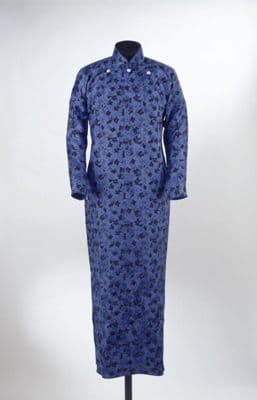
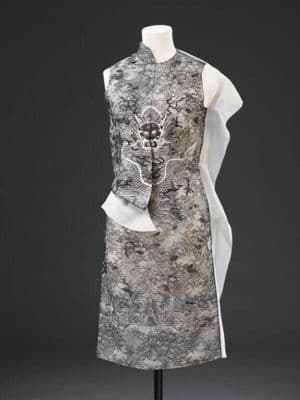
These two qipao dresses reveal how the 1970s counterculture's appetite for "exotic" Eastern aesthetics created an unlikely global uniform. The blue silk damask version, with its traditional Chinese cloud motifs, and the brown dress scattered with cheerful yellow dots both share that signature high mandarin collar and body-skimming silhouette that became shorthand for bohemian sophistication from Taipei to Toronto.
Echoes Across Time
1970s → 2000s · 50yr57%
SHARED
These two qipao reveal how Chinese dress codes traveled and transformed across decades and diasporas. The 1970s Hong Kong version, with its cheerful yellow polka dots on brown silk and relaxed fit, shows how the qipao softened into everyday wear for the Chinese diaspora—practical but still formal enough for special occasions.
Influences·traditional Chinese qipao
Victorian Early / Crinoline → 1970s · 120yr31%
Pull the Thread→
Follow this garment wherever the graph leads