V&A
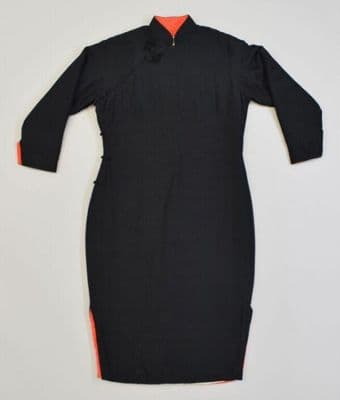
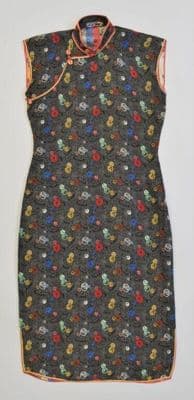
Black Padded Silk Qipao with Coral Lining
Traditional Korean · 1960s · Taiwanese
Designer
Hwa Chu Company
Production
ready-to-wear
Material
padded silk
Culture
Taiwanese
Influences
traditional Chinese qipao · 1960s Western sheath dress
A fitted black silk qipao with coral red interior lining visible at the collar, cuffs, and side vents. The dress features the characteristic high mandarin collar, three-quarter sleeves, and knee-length hemline typical of 1960s qipao styling. The garment shows a streamlined silhouette without traditional side fastenings, suggesting modern construction methods. The padded silk provides structure while maintaining the close-fitting profile that follows the body's natural lines. Side vents at the hem allow for movement while preserving the dress's sleek appearance. The contrast lining creates subtle color accents that modernize the traditional Chinese dress form for mid-century wear.
dressstraighthigh neckknee length
Connected To
Influences·traditional Chinese qipao
SHARED20 years · cross-culture
These two qipao reveal how the same silhouette traveled different paths through mid-20th century Asia. The first, with its deliberate coral flash at collar and cuffs against severe black, speaks to Korean or Taiwanese interpretations that made the Chinese dress their own through bold color blocking and substantial padding.
Pull the Thread→
Follow this garment wherever the graph leads