V&A
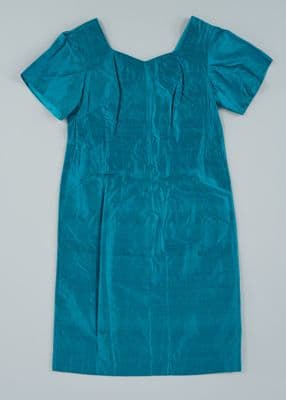
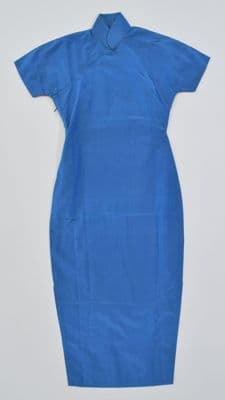
Blue Silk Satin Qipao with Mandarin Collar
1950s · 1950s · Chinese
Production
handmade
Material
silk satin
Culture
Chinese
Movement
New Look / Post-War
Influences
traditional Chinese qipao · Western fitted dress silhouette
A fitted qipao in lustrous royal blue silk satin featuring the characteristic high mandarin collar and asymmetrical front closure with traditional pankou button loops. The dress follows the body's natural silhouette without excessive ease, extending to mid-calf length. Short cap sleeves provide modest arm coverage while maintaining the garment's streamlined profile. The silk satin creates subtle light reflection across the surface, emphasizing the dress's clean geometric lines. This represents the modernized qipao style popular in 1950s Shanghai, where traditional Chinese tailoring techniques merged with contemporary Western-influenced proportions and simplified construction details.
dressstraighthigh neckmidi
Connected To
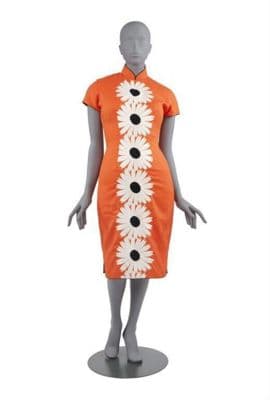
Influences·traditional Chinese qipaoMovement·New Look / Post-War
SHAREDsame era · cross-culture
Both dresses speak the same streamlined language of the 1950s qipao, but their surfaces tell different stories of cultural adaptation. The blue silk version maintains the austere elegance of traditional Chinese tailoring—that knife-sharp mandarin collar and body-skimming cut that turns restraint into seduction. The orange dress takes the same architectural bones but dresses them up for export, scattering white daisies down the front like breadcrumbs for Western eyes hungry for "Oriental" charm.
Echoes Across Time
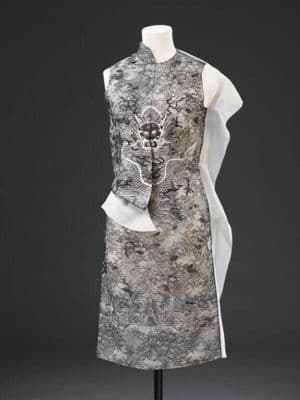
1950s → 2000s · 60yr58%
SHARED
Both dresses speak the same visual language of the qipao's essential geometry—that high mandarin collar, the diagonal front closure, the body-conscious silhouette that skims rather than clings—but they're separated by six decades of cultural translation. The blue silk version has the restrained elegance of mid-century tailoring, all clean lines and unadorned surfaces, while the later dress layers on ornate dragon embroidery like armor made of silk thread.
Influences·traditional Chinese qipao
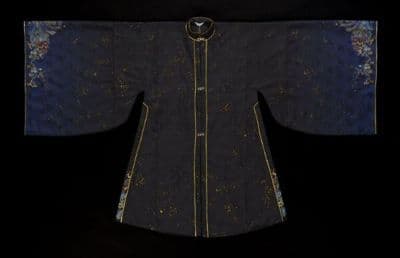
1950s → 2020s
Pull the Thread→
Follow this garment wherever the graph leads