SMITHSONIAN
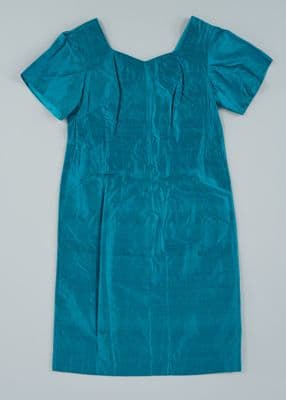
Teal Blue Silk Dupioni Shift Dress
1990s · 1990s · American
Production
ready-to-wear
Material
silk dupioni
Culture
American
Movement
Minimalism
Influences
1960s shift dress silhouette
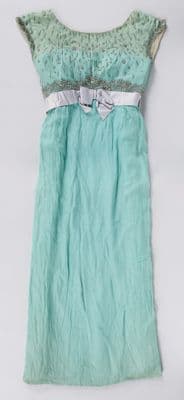
A knee-length shift dress in vibrant teal silk dupioni featuring a straight, minimalist silhouette characteristic of 1990s fashion. The dress has short, structured sleeves that extend horizontally from the shoulders, creating a subtle geometric line. The neckline appears to be a simple scoop or boat neck. The silk dupioni fabric shows its characteristic slubbed texture and lustrous finish, with natural irregularities in the weave creating subtle surface variation. The garment is constructed with clean, architectural lines typical of the decade's preference for streamlined shapes. Vertical seaming details are visible, suggesting tailored construction that maintains the dress's columnar form while providing structure.
dressstraightscoop neckknee length
Connected To
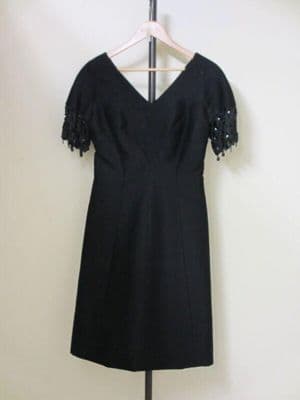
Influences·1960s shift dress silhouette
SHARED30 years · cross-culture
These two dresses trace the evolution of the shift silhouette across three decades, but with telling differences in their approach to femininity. The black 1950s dress still hedges its bets with that fitted waist and delicate lace sleeves—it's a shift dress that hasn't quite committed to the revolution—while the teal 1990s version goes full minimalist with its boxy, unforgiving cut and those aggressively puffed sleeves that look borrowed from a surgeon's scrubs.
Pull the Thread→
Follow this garment wherever the graph leads