V&A
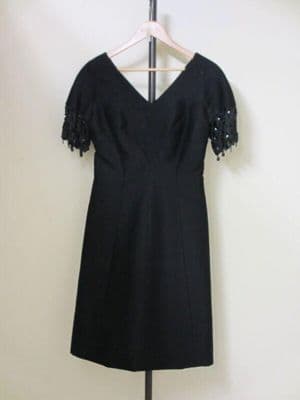
Black Silk Crepe Cocktail Dress and Coat
1950s · 1960s · British
Designer
Jacques Heim
Production
ready-to-wear
Material
silk crepe
Culture
British
Movement
Mod · New Look / Post-War
Influences
1960s shift dress silhouette
A black silk cocktail dress featuring a fitted sheath silhouette characteristic of 1960s sophistication. The dress has a V-neckline and short sleeves adorned with decorative black lace or cutwork trim that creates textural contrast against the smooth silk fabric. The garment follows the body's natural lines without excessive volume, ending at knee length in the modern proportions favored during the Space Age era. The construction appears to be machine-sewn with clean, minimal seaming that emphasizes the sleek geometric form. The lace sleeve treatment adds feminine detail while maintaining the dress's streamlined aesthetic that defined mid-1960s cocktail wear.
dressfit and flarev-neckknee length
Connected To
Influences·1960s shift dress silhouette
SHARED30 years · cross-culture
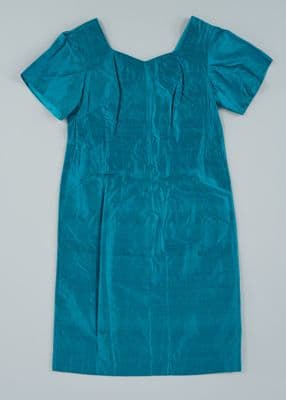
These two dresses trace the evolution of the shift silhouette across three decades, but with telling differences in their approach to femininity. The black 1950s dress still hedges its bets with that fitted waist and delicate lace sleeves—it's a shift dress that hasn't quite committed to the revolution—while the teal 1990s version goes full minimalist with its boxy, unforgiving cut and those aggressively puffed sleeves that look borrowed from a surgeon's scrubs.
Echoes Across Time
1990s → 1950s · 50yr60%
SHARED
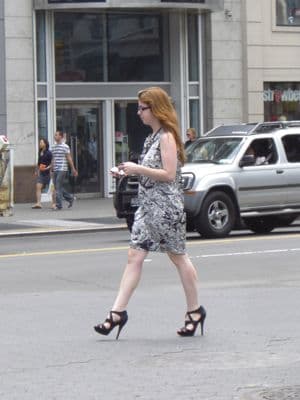
The 1990s printed shift and the 1950s black cocktail dress are separated by four decades but united by the clean, architectural lines that Balenciaga and his contemporaries perfected in the late 1950s—that columnar silhouette that skims the body without clinging.
Influences·1960s shift dress silhouette

2000s → 1950s · 50yr60%
SHARED
Pull the Thread→
Follow this garment wherever the graph leads