2000s · 2010s · American
Production
ready-to-wear
Material
ponte knit
Culture
American
Movement
Indie Sleaze
Influences
1960s shift dress silhouette
A sleeveless black sheath dress in ponte knit fabric that follows the body's silhouette closely from shoulders to below the knee. The dress features a high round neckline and appears to have princess seaming or darting through the bodice for a tailored fit. The ponte knit provides structure while allowing stretch, creating a smooth, unbroken line from bust to hem. The hemline falls approximately mid-calf, and the overall silhouette is characteristic of contemporary formal wear that emphasizes a streamlined, professional aesthetic. The fabric appears to have a matte finish typical of ponte knits, which provides opacity and shape retention.
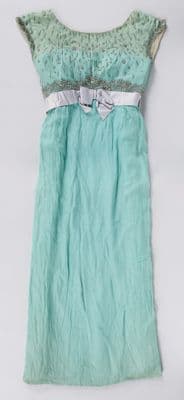
These dresses are separated by five decades but united by the democratic promise of synthetic fabrics—both use man-made materials to deliver sophisticated silhouettes at accessible price points. The 1960s turquoise number, with its beaded bodice and flowing chiffon skirt, represents the era's optimistic belief that synthetic fabrics could democratize glamour, while the black ponte knit sheath translates that same accessibility into the sleek, body-conscious vocabulary of the 2000s.


These dresses are separated by five decades but united by the democratic promise of synthetic fabrics—both use man-made materials to deliver sophisticated silhouettes at accessible price points. The 1960s turquoise number, with its beaded bodice and flowing chiffon skirt, represents the era's optimistic belief that synthetic fabrics could democratize glamour, while the black ponte knit sheath translates that same accessibility into the sleek, body-conscious vocabulary of the 2000s.

Follow this garment wherever the graph leads
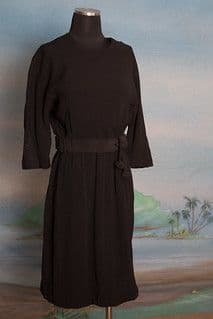
Both dresses trace their lineage back to the revolutionary 1960s shift, but they've evolved in opposite directions—the charcoal wool dress with its belted waist and three-quarter sleeves maintains the decade's easy, boxy proportions, while the black ponte sheath has been pulled taut into body-conscious territory that would have horrified the original mod girls.
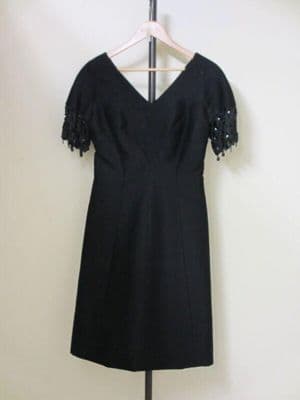
These two black dresses are separated by half a century but united by the enduring power of the fitted sheath—a silhouette that Hubert de Givenchy and his contemporaries perfected in the 1950s and that refuses to quit the closet. The red carpet dress updates the formula with modern ponte's body-conscious stretch and a more aggressive fit through the hips, while the vintage piece maintains the original's more forgiving A-line and relies on silk crepe's natural drape for its elegance.
These two dresses trace a direct line from the 1990s' casual appropriation of sixties minimalism to the 2000s' more calculated body-consciousness. The teal shift floats loosely above the knee with that decade's characteristic insouciance — it's the Mod silhouette stripped of its architectural precision and rendered in humble polyester.

These two black dresses are separated by half a century but united by the enduring power of the fitted sheath—a silhouette that Hubert de Givenchy and his contemporaries perfected in the 1950s and that refuses to quit the closet. The red carpet dress updates the formula with modern ponte's body-conscious stretch and a more aggressive fit through the hips, while the vintage piece maintains the original's more forgiving A-line and relies on silk crepe's natural drape for its elegance.