FASHIONPEDIA
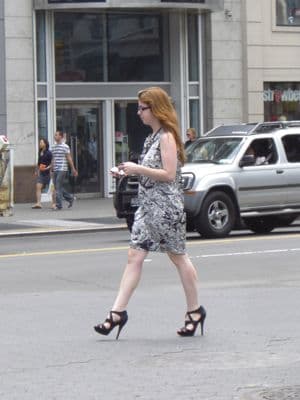
Black White Abstract Print Cotton Shift Dress
1990s · 2010s · American
Production
ready-to-wear
Material
cotton blend
Culture
American
Movement
Minimalism
Influences
1960s shift dress silhouette
A sleeveless shift dress with a straight, body-skimming silhouette that falls above the knee. The garment features an all-over black and white abstract or floral print on what appears to be a lightweight cotton blend fabric. The dress has a simple round neckline and appears to be unlined, creating a casual drape. The construction is minimal with clean seaming and no visible embellishments. The wearer pairs it with black strappy platform sandals, demonstrating the dress's versatility for contemporary street wear. The print pattern creates visual texture while maintaining the minimalist aesthetic of the early 2000s.
dressstraightscoop neckabove-the-knee
Connected To

Influences·1960s shift dress silhouette
SHARED10 years · cross-culture
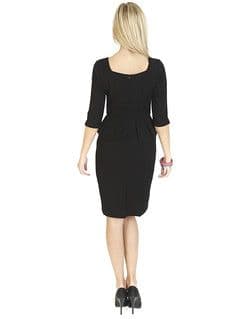
Both dresses trace their lineage back to the revolutionary 1960s shift, but they've traveled different paths to get here. The navy ponte sheath has evolved into corporate armor—that smooth, body-skimming knit and precise three-quarter sleeves designed to project competence in boardrooms, while the black-and-white printed shift maintains the original's youthful rebellion with its loose, A-line silhouette and graphic pattern that practically vibrates with movement.
Echoes Across Time
1990s → 1950s · 50yr60%
SHARED
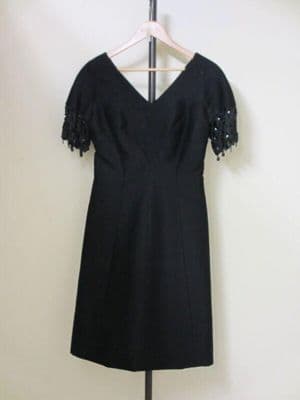
The 1990s printed shift and the 1950s black cocktail dress are separated by four decades but united by the clean, architectural lines that Balenciaga and his contemporaries perfected in the late 1950s—that columnar silhouette that skims the body without clinging.
Influences·1960s shift dress silhouette
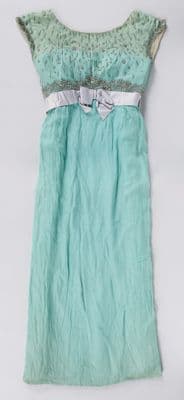
1990s → 1960s · 50yr60%
SHARED
Pull the Thread→
Follow this garment wherever the graph leads