V&A
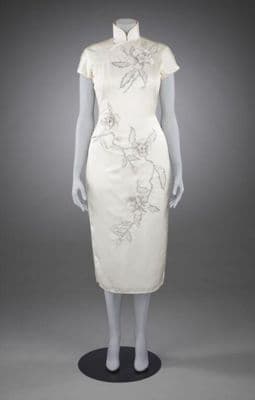
Ivory Silk Satin Qipao with Metallic Embroidery
1960s · 1960s · Hong Kong Chinese
Production
ready-to-wear
Material
silk satin
Culture
Hong Kong Chinese
Movement
Space Age
Influences
traditional Chinese qipao · 1960s cocktail dress silhouette
This ivory silk satin qipao features the characteristic high mandarin collar and form-fitting silhouette that skims the body from bust to knee. The dress displays intricate machine embroidery in metallic silver and gold threads, creating delicate floral and vine motifs that cascade asymmetrically across the bodice and down one side. Short cap sleeves provide modest coverage while maintaining the garment's sleek profile. The knee-length hemline reflects 1960s modernization of the traditional Chinese dress form. Side seam construction and darts create the precise tailored fit typical of Hong Kong qipao craftsmanship during this period, when the garment had evolved from loose traditional robes into sophisticated cocktail wear.
dresspencilhigh neckknee length
Connected To
Influences·traditional Chinese qipaoFunction·formal-evening
SHAREDsame era · cross-culture
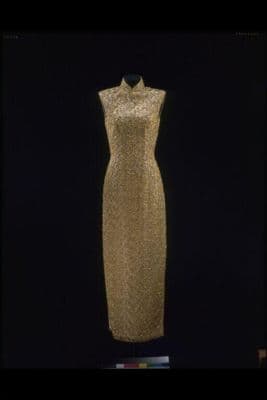
These two qipaos reveal how Hong Kong's 1960s fashion scene crystallized the form's evolution from traditional Chinese dress to international evening wear. The golden lace version pushes toward pure glamour—that high mandarin collar and body-skimming silhouette rendered in Western metallic lace that catches light like chainmail, while the ivory silk maintains more classical proportions with its delicate floral embroidery trailing asymmetrically down the body.
Echoes Across Time
2000s → 1960s · 40yr57%
SHARED
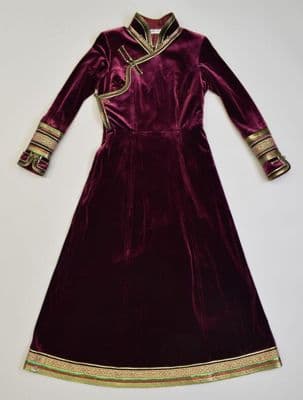
The burgundy velvet robe stretches the qipao's DNA across four decades and two continents, trading the ivory dress's precise Mandarin collar and body-skimming silhouette for a looser, more Western interpretation that reads more bathrobe than cheongsam. Where the 1960s Hong Kong original speaks in whispers—delicate metallic florals scattered like fallen petals across silk satin—the 2000s version shouts with heavy gold braiding that transforms traditional frog buttons into pure ornament.
Influences·traditional Chinese qipao
2010s → 1960s
Pull the Thread→
Follow this garment wherever the graph leads