V&A
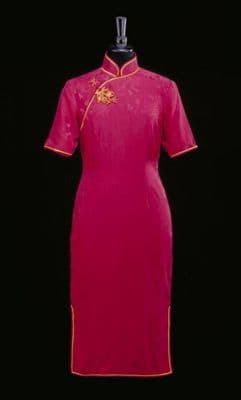
Fuchsia Pink Silk Damask Qipao with Gold Details
Chinese Traditional · 1990s · Hong Kong Chinese
Designer
Ching Wah Leung of Linva Tailor
Production
handmade
Material
silk damask
Culture
Hong Kong Chinese
Influences
1930s Shanghai qipao · Manchu banner dress origins
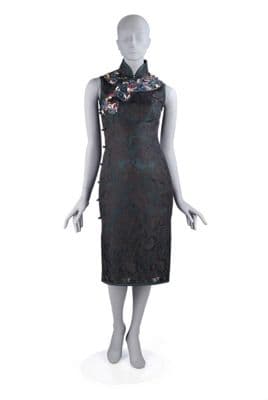
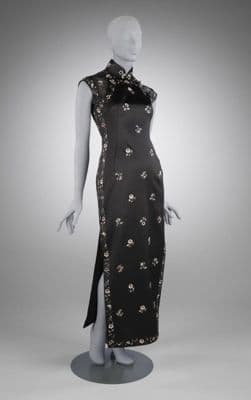
A vibrant fuchsia pink qipao featuring the classic Chinese dress silhouette with a high mandarin collar and asymmetrical front closure secured by traditional knotted buttons. The silk damask fabric displays a subtle woven pattern that catches light across the surface. The dress has short sleeves and follows the body's contours closely without excessive tightness, ending at knee length. Gold piping trims the collar, front placket, and sleeve edges, providing elegant contrast against the rich pink base. The side seam likely features a modest slit for movement. This represents the refined tailoring tradition of Hong Kong's skilled Chinese tailors during the 1990s.
dressstraighthigh neckmidi
Connected To
63%
Influences·1930s Shanghai qipao
SHARED40 years
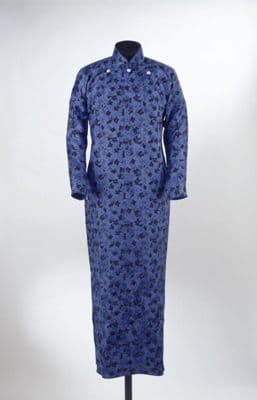
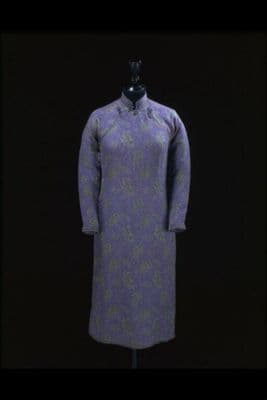
These two qipaos trace the evolution of a silhouette from Shanghai sophistication to Hong Kong pragmatism. The fuchsia silk version holds tight to the 1930s ideal—that knife-sharp mandarin collar, the body-conscious fit that skims rather than clings, and the restrained gold embroidery that whispers wealth.
Echoes Across Time
Chinese Traditional → 1950s · 40yr63%
SHARED
These two qipaos trace the evolution of a silhouette from Shanghai sophistication to Hong Kong pragmatism. The fuchsia silk version holds tight to the 1930s ideal—that knife-sharp mandarin collar, the body-conscious fit that skims rather than clings, and the restrained gold embroidery that whispers wealth.
Influences·1930s Shanghai qipao
Great Depression → Chinese Traditional · 60yr45%
Pull the Thread→
Follow this garment wherever the graph leads