V&A
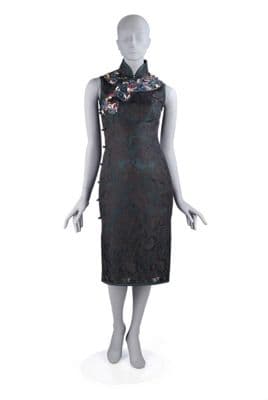
Black Silk Gauze Qipao with Embroidered Details
2010s · 2010s · Chinese
Designer
Guo Yujun and Xu Yulin
Production
artisan-craft
Material
silk gauze
Culture
Chinese
Movement
Dark Academia
Influences
1930s Shanghai qipao · traditional Chinese embroidery
A contemporary qipao featuring a fitted sheath silhouette that follows the body's natural lines from high mandarin collar to knee length. The black silk gauze base provides subtle transparency while maintaining modesty. Delicate embroidered motifs in burgundy and gold threads create scattered floral patterns across the bodice and skirt. The traditional mandarin collar stands approximately two inches high with button closure. Side seam construction emphasizes the streamlined fit typical of modern qipao interpretations. The sleeveless design and midi length represent a contemporary adaptation of the traditional Chinese dress form, balancing cultural heritage with modern minimalist aesthetics.
dresspencilhigh neckknee length
Connected To
Influences·1930s Shanghai qipao
SHARED60 years · cross-culture
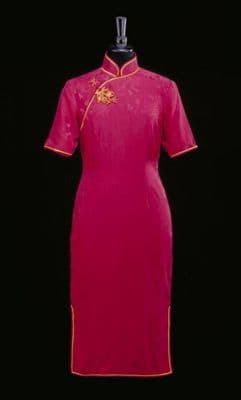
These two qipaos trace the evolution of a silhouette that refused to stay put. The 1950s lavender dress with its demure long sleeves and modest length captures the qipao's migration to Hong Kong, where it became the uniform of respectable Chinese femininity in exile—that synthetic crêpe a practical concession to new lives built from scratch.
Echoes Across Time
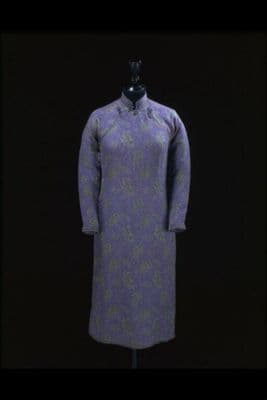
2010s → 1950s · 60yr64%
SHARED
These two qipaos trace the evolution of a silhouette that refused to stay put. The 1950s lavender dress with its demure long sleeves and modest length captures the qipao's migration to Hong Kong, where it became the uniform of respectable Chinese femininity in exile—that synthetic crêpe a practical concession to new lives built from scratch.
Influences·1930s Shanghai qipao
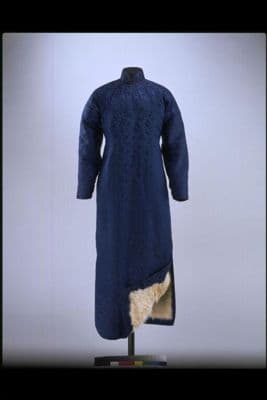
Great Depression → 2010s · 80yr37%
Pull the Thread→
Follow this garment wherever the graph leads